“God spoke, and matter existed.” This simple yet profound statement encapsulates the magnificent power described in the opening verses of Genesis. In our modern world of scientific theories and complex explanations, we sometimes overlook the elegant simplicity found in the Bible’s first words.
The book of Genesis, whose name comes from the Greek Septuagint but originally bore the Hebrew title “In the Beginning”, opens with what might be the most important declaration in all of Scripture: “In the beginning, God created the heavens and the earth.”
But this isn’t just a statement about origins. It’s a revelation about the nature of God Himself.
The Mathematical Marvel of Genesis 1:1
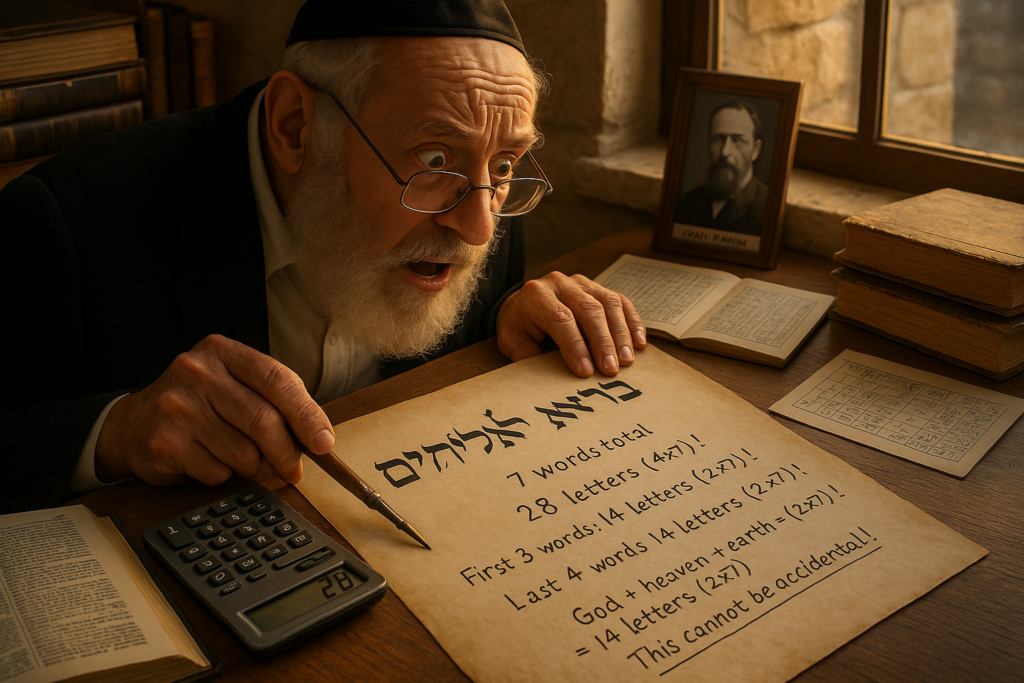
When we examine the original Hebrew text of Genesis 1:1, we discover something remarkable. This verse contains exactly seven words composed of twenty-eight letters (4 × 7). The numerical patterns don’t stop there. The three nouns mentioned God, heaven, and earth contain fourteen letters (2 × 7). The arrangement value of these letters equals 147 (21 × 7). The only verb in the sentence, “created” (bara in Hebrew), has a numerical value of 203 (29 × 7).
Therefore, what appears as a simple opening statement actually contains an intricate mathematical structure that couldn’t have happened by accident. Russian scientist Ivan Bennin dedicated 50 years of his life to researching these numerical wonders of Scripture, leaving behind 40,000 pages of documentation.
But beyond numbers, there’s something even more revealing in this text. In Hebrew, “God” appears as “Elohim”, a plural noun, while the verb “created” is singular. This grammatical anomaly, impossible in normal Hebrew syntax, points to the unity within plurality that would later be revealed as the Trinity.
The Creative Word That Sustains All Things
“God said.” This simple phrase appears eleven times in Genesis 1. God didn’t merely think the universe into existence, He spoke it. His voice brought forth light, separated waters, formed dry land, and created life.
But those divine utterances weren’t just creative acts confined to the past. “He upholds all things by His powerful word,” we’re told in Hebrews. The matter that constitutes our universe continues to exist because God’s word sustains it.
Therefore, when skeptics attempt to remove God from the equation of existence, they miss a crucial point: if God’s word were withdrawn, the universe would collapse. The same creative power that formed the cosmos is actively maintaining it moment by moment.
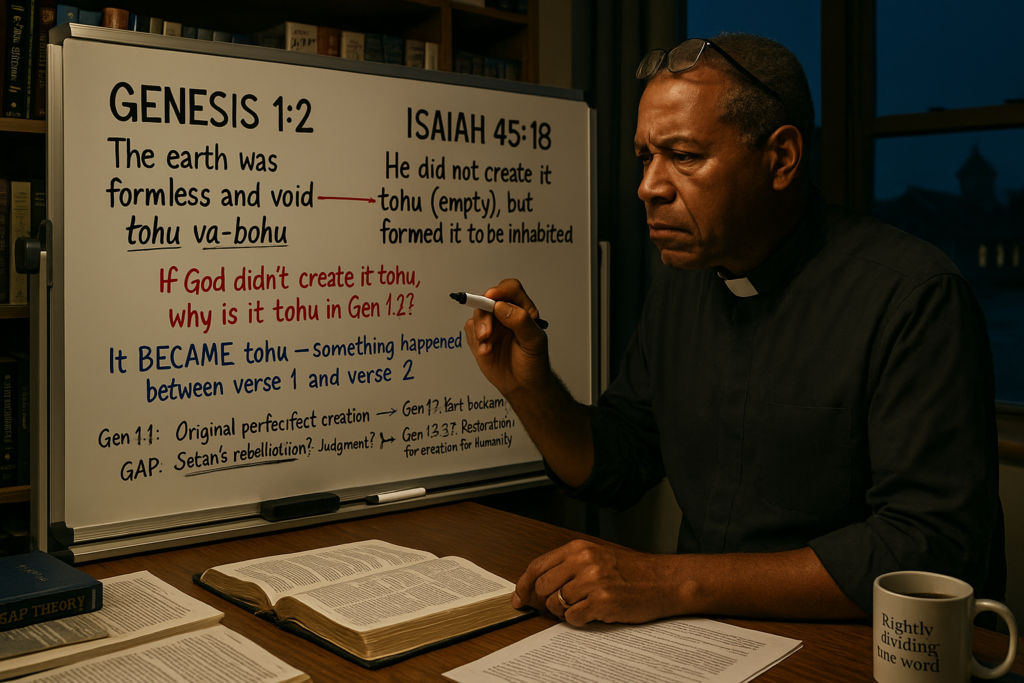
When Genesis tells us “the earth was formless and void,” the Hebrew term could also be translated as “became formless and void.” Isaiah 45:18 clarifies that God didn’t create the earth to be empty but formed it to be inhabited. This suggests something happened between the initial creation and the state described in Genesis 1:2, possibly a catastrophic event connected to Satan’s fall.
Finding Our Place in God’s Grand Design
The opening of Genesis reveals something profound about our Creator: He desires communication. Unlike lifeless idols that have mouths but cannot speak, our God is a God who speaks. From the beginning, He revealed Himself through words, ultimately speaking through His Son (Hebrews 1:1-2).
But many try desperately to erase these opening words of Genesis from our collective consciousness. By denying God as Creator, they attempt to deny His rightful ownership and authority over creation. This denial leads inevitably to spiritual and moral corruption.
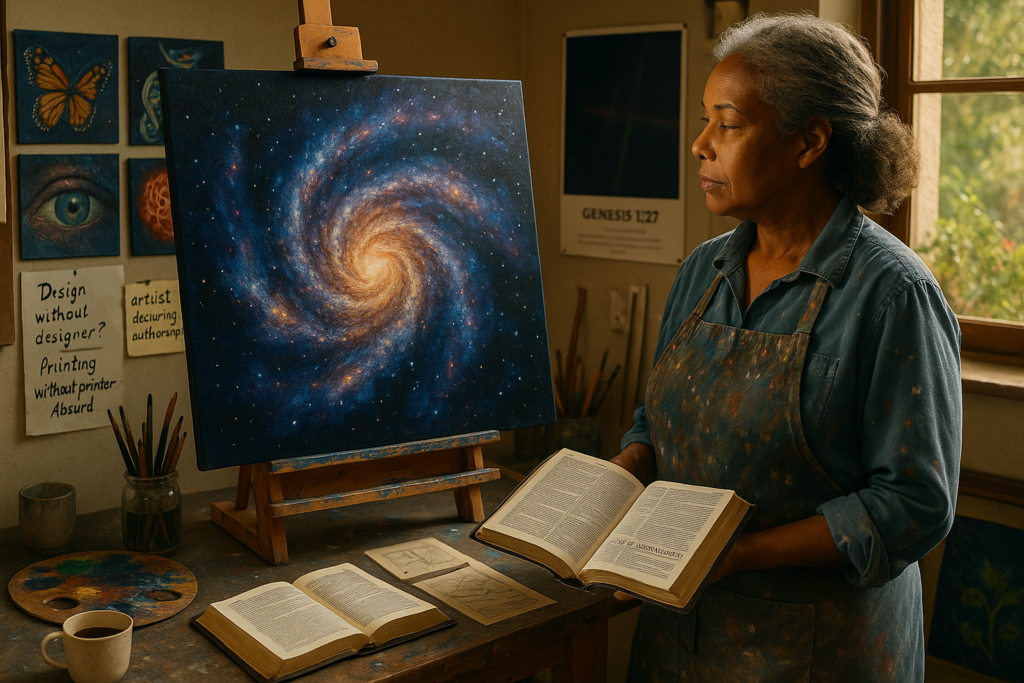
Therefore, we must anchor ourselves in this fundamental truth: “In the beginning, God created.” The intelligent design evident throughout the universe demands an intelligent Designer. When we recognize God’s creative authority, we find our proper place in His creation, not as owners but as stewards, not as accidents of nature but as purposeful creations with divine intent.
Strong Advice: Step Into the Pattern
So, what does all this mean for your life, right now? But maybe you feel like your world is chaos and void, like the earth before creation. Therefore, remember: God specializes in bringing order from chaos, fullness from emptiness, meaning from what seems meaningless.
Don’t wait for everything to make sense before you trust. But lean into the patterns, the mysteries, the intentionality of God’s word. Therefore, let your faith grow, not in what you can see or control, but in the God who creates beauty from nothing, who writes meaning into every detail, even the ones you can’t yet understand.
And if you remember nothing else, remember this: The God who began everything with a word can begin something new in you, right now. Therefore, what if the first words ever written are not just about the world’s beginning, but about yours?
Let that question be the start of your new story, because every ending is really a beginning, waiting for the Word to speak.

Other Articles