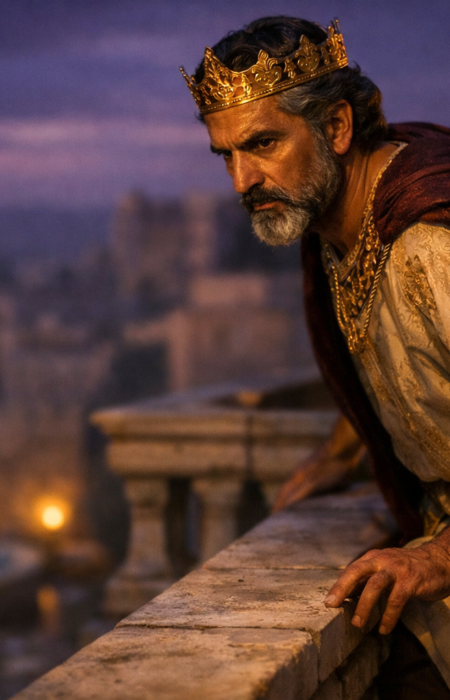
There are moments when the wrestling ends and the blessing begins, but first you have to refuse to let go.
Picture this: a man alone by a river, darkness pressing in from all sides. The water rushes past, indifferent to his fear. In a few hours, he’ll face the brother he betrayed, the brother who swore to kill him. He’s sent his family ahead, his flocks, his servants. Everything he owns crosses the Jabbok River without him. Therefore he stands here, isolated, with nothing left but the weight of his own choices.
His name is Jacob, which means “deceiver,” and he’s earned every letter of it.
When Your Past Catches Up
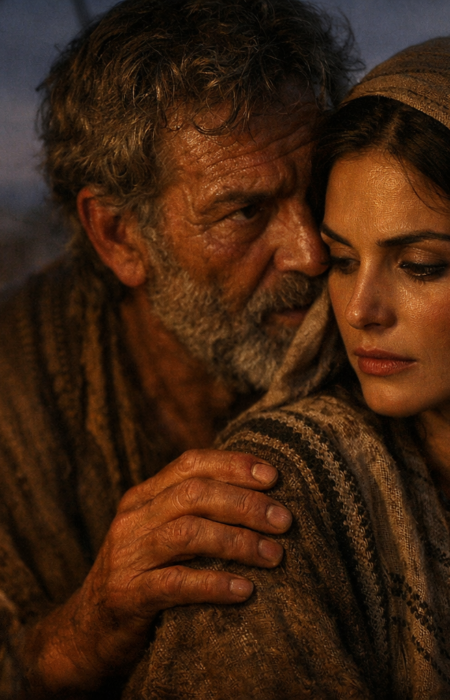
The deception happened years ago in his father’s tent. Isaac was old, his eyes clouded with age, ready to pass the family blessing to Esau, the firstborn twin (Genesis 27:1-4). But Rebecca, their mother, had other plans. She loved Jacob more, and favored him the way Isaac favored Esau. Therefore she engineered a scheme so audacious it would reshape generations.
Jacob wore goat skins on his arms to mimic Esau’s hairy skin. He carried his brother’s clothes, saturated with the smell of the field. When Isaac reached out, touching what he thought was Esau, Jacob lied directly to his father’s face (Genesis 27:18-19). The blessing came, rich with promises of abundance, authority, nations bowing down. But the blessing was stolen, not given.
Esau returned from hunting to discover the theft. His cry shattered through the tent, raw and primal (Genesis 27:34). Isaac trembled, realizing the deception, but a blessing once spoken couldn’t be recalled. Therefore Esau’s hatred became Jacob’s inheritance. “I will kill my brother,” Esau vowed (Genesis 27:41). Jacob ran, becoming a fugitive from his own family.
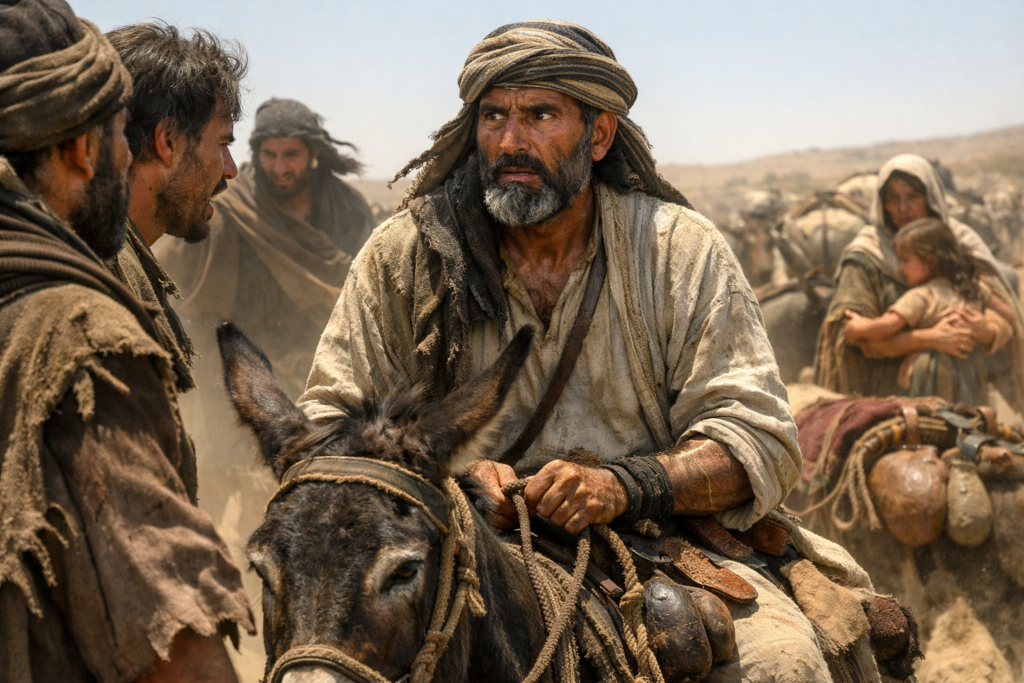
Twenty years have passed. Jacob grew wealthy in exile, married, fathered children. But prosperity couldn’t silence the past. Therefore when God told him to return home, Jacob obeyed, knowing he’d have to face Esau (Genesis 31:3, 13). As he approached Canaan, messengers brought terrifying news: Esau was coming to meet him with four hundred men (Genesis 32:6). It sounded like an army preparing for revenge.
Jacob panicked. He divided his family and possessions into two camps, reasoning that if Esau attacked one, the other might escape (Genesis 32:7-8). He prayed desperately, reminding God of promises made, begging for deliverance (Genesis 32:9-12). But prayer didn’t ease his terror. Therefore he sent wave after wave of gifts ahead, hundreds of animals, hoping to soften Esau’s rage (Genesis 32:13-21).
Then came the night by the Jabbok.
Wrestling in the Dark
Jacob sent everyone across the river. His wives, his children, his servants, everything he valued moved to the other side. Therefore he stood alone in the darkness, exposed, with nowhere left to hide.
That’s when the figure appeared.
Scripture simply says “a man wrestled with him until daybreak” (Genesis 32:24). But this was no ordinary encounter. Through the long night, Jacob grappled with someone stronger, someone who could have ended the fight instantly. But he didn’t. They struggled in the dirt, muscles straining, neither yielding. As hours passed and dawn threatened, Jacob began to understand. This wasn’t a man. This was God himself, taking human form.
The Divine wrestler struck Jacob’s hip, dislocating it with a touch (Genesis 32:25). Pain seared through Jacob’s leg, but he didn’t release his grip. Instead, he held tighter. Because Jacob finally understood something crucial: he wasn’t fighting for his life. He was fighting for his identity.
When the figure said, “Let me go, for it is daybreak,” Jacob’s response revealed everything: “I will not let you go unless you bless me” (Genesis 32:26). Think about that. His hip was wrenched, agony radiating through his body, dawn breaking, but Jacob refused to quit. He’d spent his whole life grasping, scheming, manipulating to get blessings. Therefore in this moment, bleeding and broken, he chose to simply ask. To hold on. To admit he couldn’t make it without divine intervention.
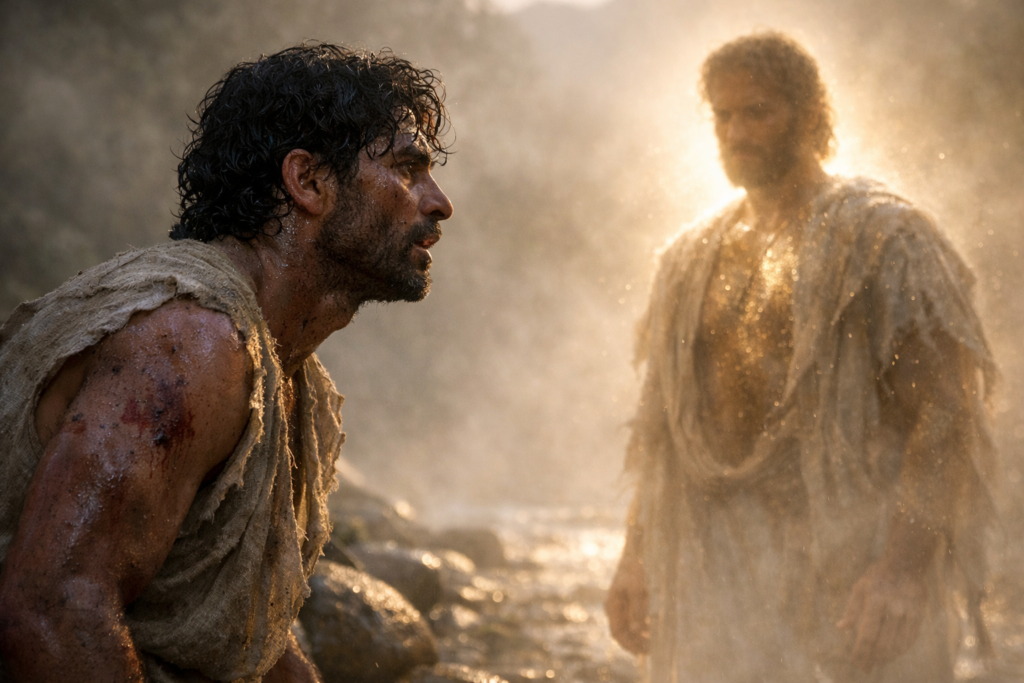
God asked his name. “Jacob,” he answered. Deceiver. Manipulator. Thief. Speaking his name meant confessing what he’d become.
But God gave him a new name: Israel, meaning “one who struggles with God” (Genesis 32:28). The blessing Jacob received wasn’t freedom from struggle. It was identity through struggle. He would carry a limp forever, a permanent reminder of this night (Genesis 32:31). But he also carried a new name, a new future, proof that God meets us in our wrestling.
The Blessing Hidden in the Struggle
Here’s what matters: Jacob limped away from that river transformed. When he finally met Esau, everything had changed. Not Esau, Jacob. He bowed seven times approaching his brother (Genesis 33:3). No more schemes. No more manipulation. Just humility born from wrestling with God.
And Esau? He ran to Jacob, embraced him, wept (Genesis 33:4). The reconciliation Jacob feared became possible because Jacob had already been reconciled to God.
This is where most people miss the depth of this story. They think it’s about persistence, about holding on until you get what you want. But look closer. Jacob didn’t defeat God in wrestling. God let him win. The Divine opponent could have destroyed Jacob with a word, yet instead He engaged, struggled, stayed through the night. Therefore the real blessing wasn’t what Jacob extracted through determination. The blessing was that God was willing to wrestle with him at all.
God doesn’t send angels with messages when you’re running from your past. He shows up himself. He gets in the dirt with you. He lets you struggle, even wound yourself in the fighting, because He knows transformation doesn’t happen from a distance.
Jesus Christ embodied this same truth centuries later. He didn’t send instructions from heaven. He came down, took flesh, engaged with broken humans directly (John 1:14). When Thomas doubted, Jesus offered his wounds to touch (John 20:27). When Peter denied Him, Jesus cooked breakfast and restored him personally (John 21:15-17). God wrestles with us because He refuses to leave us unchanged.
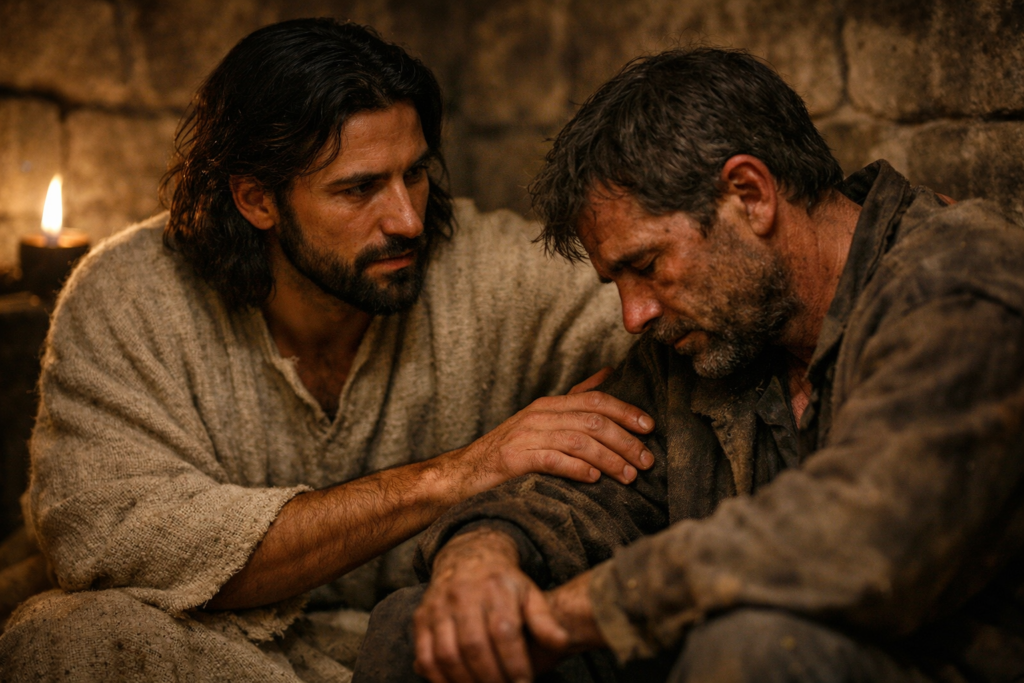
The question isn’t whether you’ll face struggles. You will. Your past will chase you. Your fears will corner you by some metaphorical river. You’ll stand alone in darkness wondering if dawn will ever come. Therefore the real question is this: when God shows up to wrestle, will you let Him go, or will you hold on until He transforms you?
Jacob’s limp wasn’t a punishment. It was proof. Evidence that he’d encountered something real, someone real. Every step for the rest of his life testified to the night he refused to quit wrestling for his blessing. His weakness became his witness.
What You Need to Hear
Stop trying to scheme your way into blessing. Stop manipulating circumstances, people, even God. Jacob spent decades doing that, and it only led him to a riverbank, terrified and alone. But when he finally stopped running, stopped planning, stopped controlling, and simply held on to God saying “I won’t let go,” everything changed.
Your struggle right now, whatever it is, might be God’s way of wrestling you into a new identity. The pain you feel might be Him dislocating the old ways you’ve relied on, the false foundations you’ve built. Therefore don’t waste the struggle. Don’t anesthetize it, don’t run from it, don’t pretend it isn’t happening. Wrestle. Hold on. Refuse to let go until God blesses you through it.
Place your faith in Jesus Christ, who didn’t just wrestle with God but is God. He’s the one who enters your darkness, engages your deepest struggles, and offers not just a blessing but complete transformation. When you hold onto Him, He doesn’t just give you what you ask for. He gives you Himself.
The wrestling ends when the blessing begins. But first, you have to refuse to let go.

Other Articles
The Heartbreaking Truth About Tamar and King David
The world’s greatest project and greatest fail