Joab received an order he’d never forget. Kill one of our own. Make it look like war. The army commander stared at the sealed letter, probably wondering what could drive a king to murder his own soldier. But Joab didn’t know the real story. Not yet. The command wasn’t about military strategy. It was about covering up a sin that had already spiraled out of control.
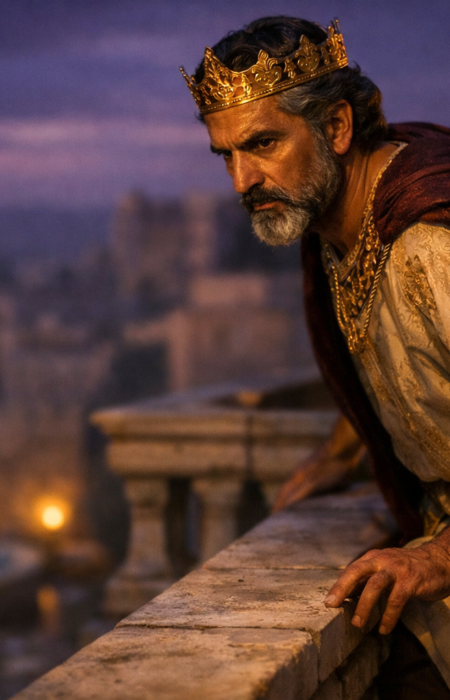
Let’s rewind to where this actually started. A rooftop in Jerusalem. Springtime, when kings normally go to war (2 Samuel 11:1). But David stayed home. Walking his palace roof one evening, his eyes caught something they shouldn’t have. A woman bathing. Bathsheba. The text doesn’t sugarcoat it. She was beautiful to look at (2 Samuel 11:2).
David sent someone to find out about her. The report came back loaded: “She is Bathsheba, the daughter of Eliam and the wife of Uriah the Hittite” (2 Samuel 11:3). Three crucial details. She had a father. She had a husband. And that husband? One of David’s elite warriors. The Mighty Men. The guys who bled for him when he was running from Saul.
Therefore, David should have walked away. But he didn’t. He sent messengers to get her. She came to the palace. And David slept with her (2 Samuel 11:4).
Think about Bathsheba’s position here. A royal summons isn’t a request. You don’t say no to a king. The power gap between them was absolute. She had no leverage, no escape route, no choice that wouldn’t cost her everything.
Then came the message that detonated David’s world: “I am pregnant” (2 Samuel 11:5).
When the Cover-Up Begins
Panic mode. David’s mind raced through the implications. A king commits adultery with a soldier’s wife while that soldier fights his battles? Political suicide. Loss of moral authority. Total collapse of everything he built. Therefore, David hatched a plan.
Bring Uriah home from the front lines. Let him sleep with his wife. Problem solved. The child could pass as Uriah’s. No one would know.
Uriah arrived. David asked him about the war, about Joab, about the troops. Small talk covering big intentions. Then David said it: “Go down to your house and wash your feet” (2 Samuel 11:8). Code for “go be with your wife.” David even sent a gift after him, sweetening the setup.
But Uriah didn’t go home. He slept at the palace entrance with David’s servants. When David found out, he must have felt his carefully constructed plan crumbling. So David asked him directly, “Haven’t you just come from a military campaign? Why didn’t you go home?” (2 Samuel 11:10).
Uriah’s answer cut like a blade: “The ark and Israel and Judah are staying in tents, and my commander Joab and my lord’s men are camped in the open country. How could I go to my house to eat and drink and make love to my wife? As surely as you live, I will not do such a thing!” (2 Samuel 11:11).
Read that again slowly. Uriah’s integrity wouldn’t bend. His brothers were sleeping on the ground. Therefore, he would too. His honor ran deeper than comfort, deeper than desire, deeper than a king’s manipulation.
David tried again. He invited Uriah to dinner. Got him drunk. Surely alcohol would break his resolve. But even drunk, Uriah slept with the servants (2 Samuel 11:13). His code of conduct was bone-deep.
David now faced the worst kind of choice. His sin was about to go public. His reputation would shatter. Therefore, he made a decision that would haunt Israel for generations.
He wrote a letter to Joab: “Put Uriah out in front where the fighting is fiercest. Then withdraw from him so he will be struck down and die” (2 Samuel 11:15). And here’s the twisted cruelty. David sealed that letter and gave it to Uriah to deliver. Uriah carried his own death sentence back to the battlefield, trusting his king completely.
The Innocent Man Dies
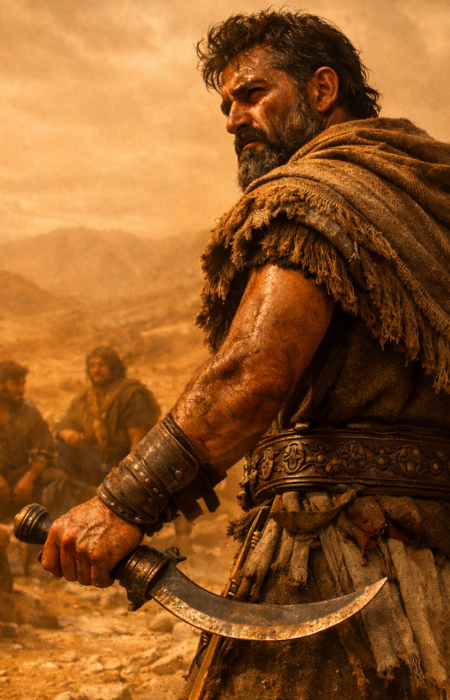
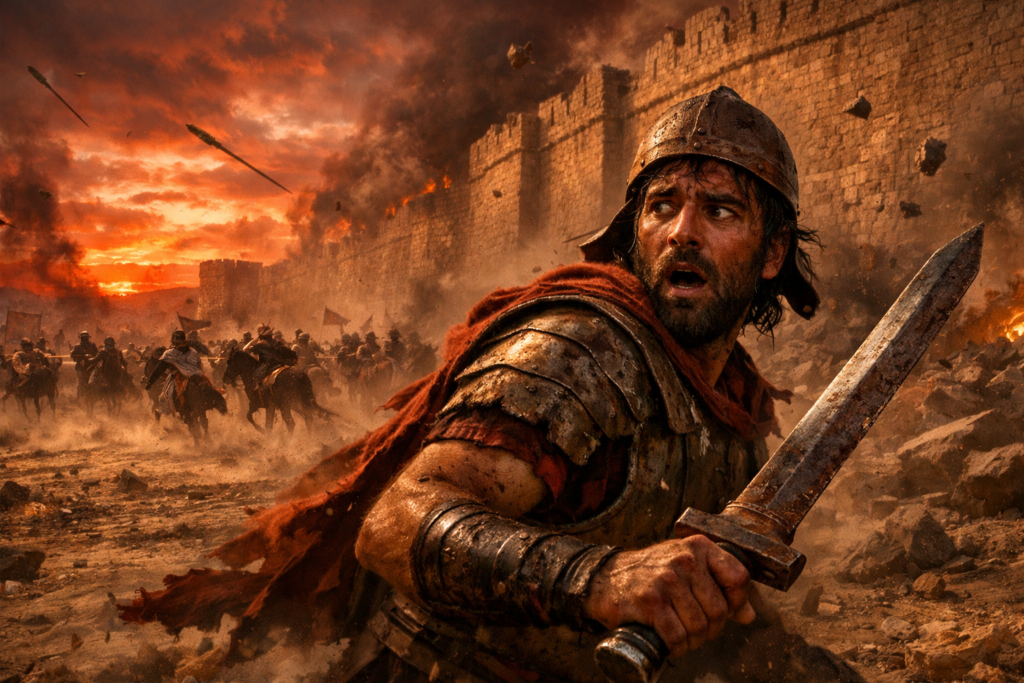
Joab read the orders. He knew what this meant. Uriah the Hittite wasn’t just any soldier. He was elite. One of the Mighty Men. Therefore, killing him required placing him against the enemy’s best warriors.
The battle at Rabbah intensified. Joab positioned Uriah at the most dangerous point, right where the city’s fiercest defenders stood. The fighting got brutal. Then Joab gave the signal. Retreat. Pull back. Every soldier received the order.
Everyone except Uriah.
He stood there as his comrades withdrew. The city gates opened. Enemy warriors poured out. Uriah found himself isolated, betrayed by the strategy he trusted. But his resolve never wavered. One fellow soldier stayed with him, brave to the end. They fought with everything they had. But the odds were impossible. The betrayal was complete.
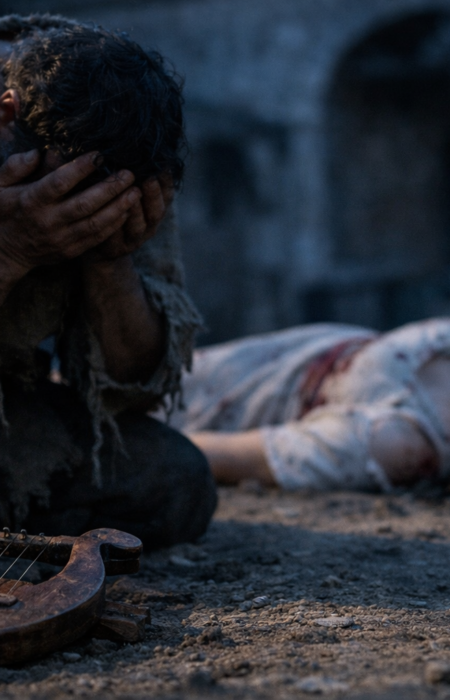
Uriah the Hittite died on that battlefield (2 Samuel 11:17). Never knowing why. Never understanding that his king orchestrated his murder. Never realizing that his wife’s pregnancy was the real reason he was abandoned.
Joab sent a messenger to David. The report included details about the battle’s failures. But it ended with the only news David cared about: “Moreover, your servant Uriah the Hittite is dead” (2 Samuel 11:21). David’s response was chilling. “Say this to Joab: ‘Don’t let this upset you; the sword devours one as well as another'” (2 Samuel 11:25). Casual. Dismissive. As if Uriah’s life meant nothing.
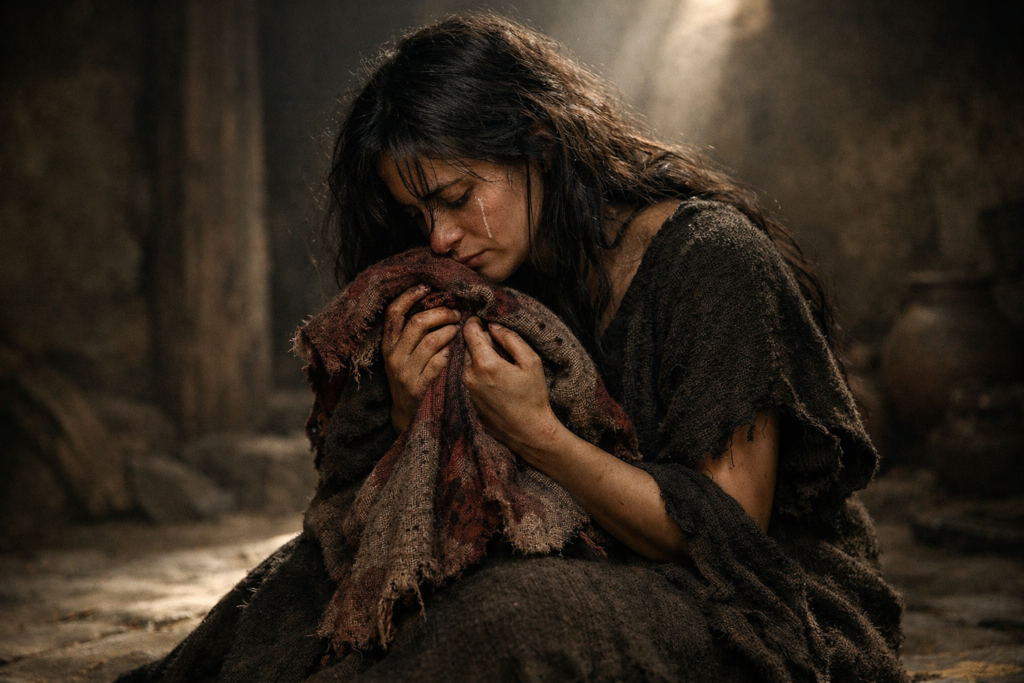
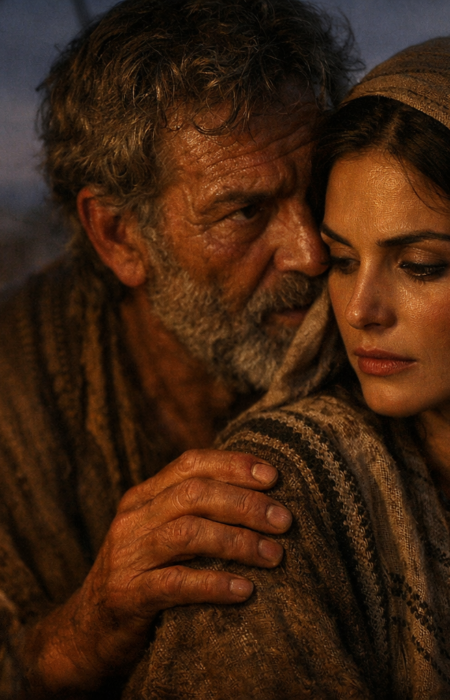
Bathsheba heard about her husband’s death. She mourned him (2 Samuel 11:26). Can you imagine her grief? Her confusion? Her knowledge of what was growing inside her? When the mourning period ended, David married her. She gave birth to a son. From the outside, everything looked legitimate now. The secret seemed safe.
But the last verse of 2 Samuel 11 destroys that illusion: “But the thing David had done displeased the Lord” (2 Samuel 11:27).
The Prophet Brings Truth
Nathan the prophet walked into David’s chamber. No appointment. No warning. He told David a story. A rich man with huge flocks. A poor man with one little lamb. The rich man needed to feed a guest. But instead of taking from his own abundance, he stole the poor man’s only lamb (2 Samuel 12:1-4).
David’s sense of justice exploded. “As surely as the Lord lives, the man who did this must die! He must pay for that lamb four times over, because he did such a thing and had no pity” (2 Samuel 12:5-6).
Nathan looked him in the eye. “You are the man” (2 Samuel 12:7).
Four words. David’s world collapsed. Nathan didn’t soften it. God gave David everything. The kingdom. Victories. Wives. And if that wasn’t enough, God would have given even more. But David despised God’s word. He struck down Uriah the Hittite with the sword of the Ammonites and took his wife. Therefore, the sword would never depart from David’s house (2 Samuel 12:9-10).
The consequences poured out. David’s own household would rise against him. His wives would be violated publicly. And the child born to Bathsheba? He would die (2 Samuel 12:11-14).
David finally spoke the truth: “I have sinned against the Lord” (2 Samuel 12:13). No excuses. No justifications. Just confession. Nathan responded with words David didn’t deserve: “The Lord has taken away your sin. You are not going to die” (2 Samuel 12:13). But mercy didn’t erase the consequences. The child would still die.
The baby got sick. David fasted. He lay on the ground all night, pleading with God (2 Samuel 12:16). For seven days he begged for mercy. His servants tried to get him to eat. He refused. Then on the seventh day, the child died.
David’s servants feared telling him. But David noticed their whispers. “Is the child dead?” he asked. They nodded. David got up, washed, changed clothes, went to worship, then ate (2 Samuel 12:19-20).
His servants were confused. “While the child was alive, you fasted and wept. Now he’s dead and you get up and eat?” David’s answer revealed a man facing reality: “While the child was still alive, I thought, ‘Who knows? The Lord may be gracious to me and let the child live.’ But now that he is dead, why should I go on fasting? Can I bring him back again? I will go to him, but he will not return to me” (2 Samuel 12:22-23).
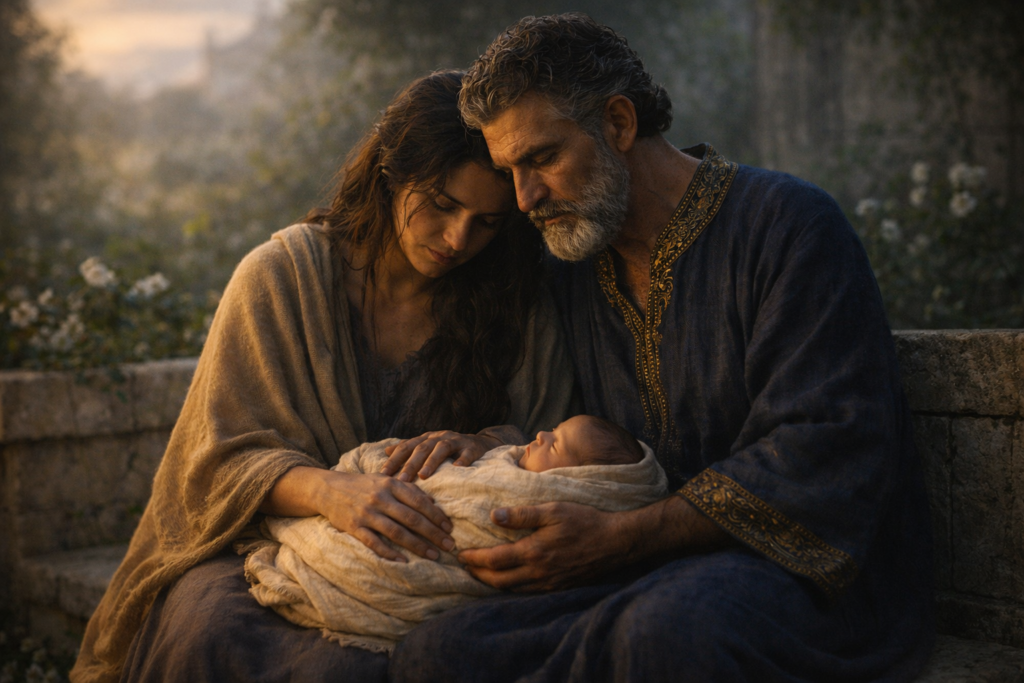
David comforted Bathsheba. They had another son. Solomon. And God loved this child (2 Samuel 12:24-25). But David’s earlier sin kept spreading its poison. His son Amnon would rape his daughter Tamar. His son Absalom would murder Amnon, then lead a rebellion. The sword never left David’s house. Exactly as Nathan said.
What This Demands From You
Here’s the brutal truth. David didn’t wake up planning to destroy lives. He just looked when he should have turned away. One glance became one action. One action required one cover-up. One cover-up demanded one murder. And one murder unleashed generational devastation.
Sin never stops where you think it will. It always costs more. Take you further. Keeps you longer. But here’s the other side. David’s confession, “I have sinned against the Lord,” opened a door to mercy. Not escape from consequences. He still lost the child. His family still imploded. But he found forgiveness.
Psalm 51 is David’s response to this whole nightmare. “Create in me a pure heart, O God, and renew a steadfast spirit within me” (Psalm 51:10). That’s the prayer of someone who knows he can’t fix himself. He needs divine intervention. A new heart. A renewed spirit.
Maybe you’re carrying something right now. Not adultery or murder, but something. A compromise that seemed small but has grown into a monster you can barely contain. A relationship that violates your convictions. A habit wrapped in secrecy. A financial decision that’s become a web of lies.
The temptation is to do what David did. Cover it. Manage it. Keep it buried. But it won’t stay buried. It multiplies in darkness.
Jesus Christ came for people exactly like David. People who’ve taken what wasn’t theirs. People who’ve hurt others to protect themselves. People who’ve built elaborate structures to hide their sin. “If we confess our sins, he is faithful and just and will forgive us our sins and purify us from all unrighteousness” (1 John 1:9).
Faith in Jesus Christ means trusting his mercy is greater than your sin. Not because your sin isn’t serious. It is. Uriah is still dead. Bathsheba still suffered. The child still died. But because Jesus absorbed the full weight of justice on the cross, mercy flows to those who confess.
Stop trying to be your own savior. You can’t fix this. You need what David needs. Someone looks you in the eye and says, “You are the man,” then points you to grace that covers what you’ve done.
The question isn’t whether you’ll face your sin. Nathan will eventually come. The question is whether you’ll meet it with confession or denial. With Jesus or without him. One path leads to ongoing destruction. The other leads to a clean heart and a renewed spirit.
The choice is yours. But you need to make it. Now. Today. Before one look becomes one action, and one action becomes a tragedy you can’t undo.
Because somewhere right now, someone is standing on a rooftop. And what happens next determines everything.

Other Articles

How One Binding Vow Led to Ruthless Sacrifice
When God sees a warrior but you see a coward