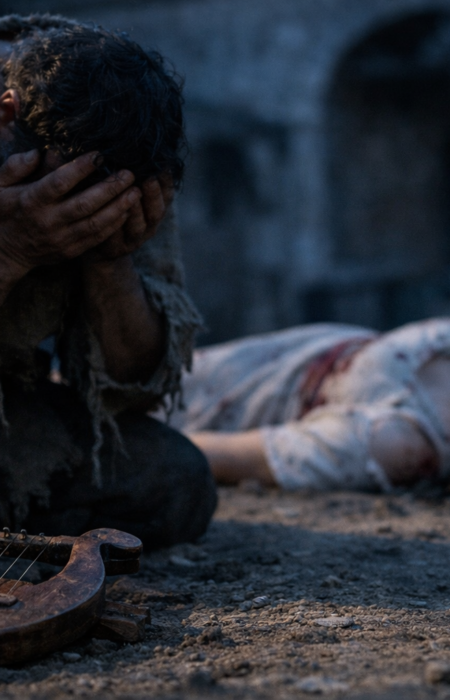
Picture a mother abandoning her dying child under a bush in the scorching desert. She walks away because she cannot bear to watch him take his final breath. This isn’t fiction. This is Hagar’s story, and it reveals something most of us would rather ignore about faith, suffering, and the plans of God.
The Promise That Created A Problem
God made Abraham a staggering promise: he would become the father of a great nation (Genesis 12:2). But there was a problem. Sarah, his wife, was barren. Years turned into decades. The promise remained unfulfilled. Sarah’s womb stayed empty.
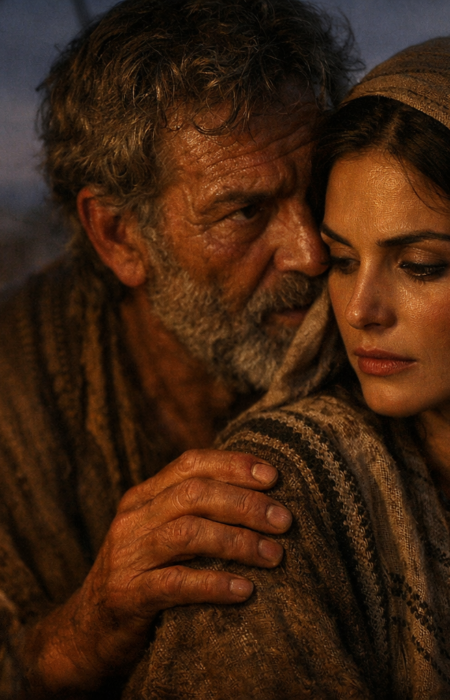
Desperation does strange things to faith. Sarah decided to help God along. She offered her Egyptian servant Hagar to Abraham as a surrogate, a common practice in their culture but a decision that would unleash chaos (Genesis 16:1-3). Abraham agreed. Hagar conceived. The plan worked.
Therefore, you’d expect relief. Joy. The promise was fulfilled at last.
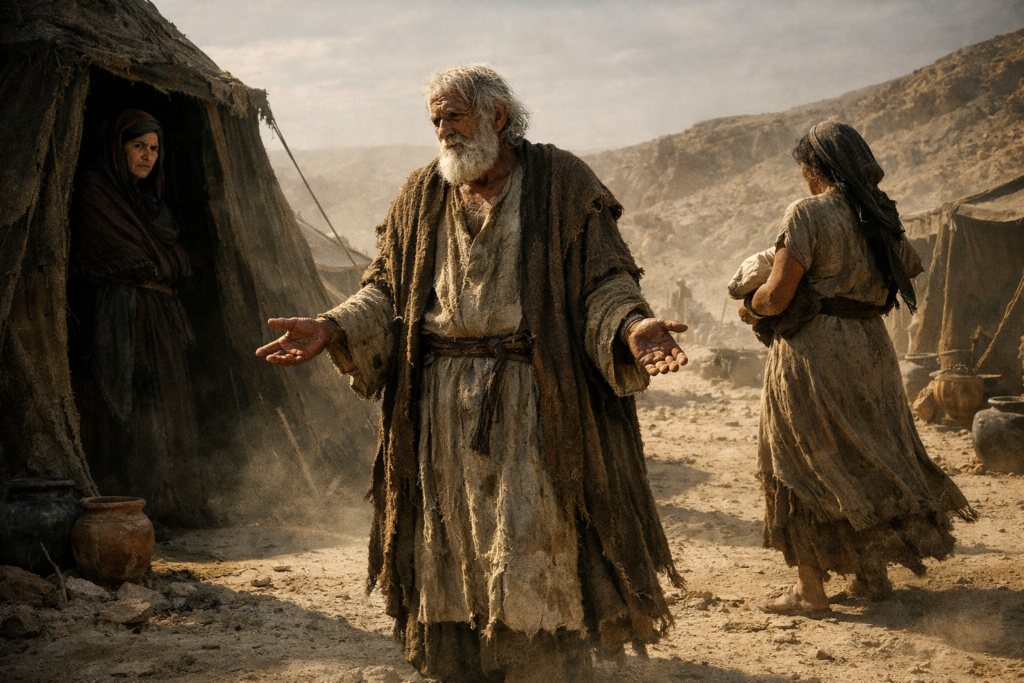
But human nature has a way of poisoning even our best intentions. The moment Hagar became pregnant, something shifted. Sarah, who orchestrated this entire arrangement, began to despise her. Jealousy consumed her. The servant who had done exactly what was asked now became the target of cruelty. Sarah’s treatment grew so harsh that Hagar’s daily existence became unbearable (Genesis 16:4-6).
Abraham, caught between his wife and his pregnant concubine, chose the path of least resistance. “Your servant is in your hands,” he told Sarah. “Do with her whatever you think best” (Genesis 16:6). Translation: I’m staying out of this.
Hagar fled into the wilderness, alone and pregnant, choosing the risk of death over the certainty of continued abuse.
The God Who Sees
The desert should have been her grave. But God interrupts our worst moments with his presence.
An angel found Hagar by a spring of water. The angel’s first words carried both gentleness and challenge: “Hagar, servant of Sarai, where have you come from, and where are you going?” (Genesis 16:8). The question forced Hagar to confront her reality. She was running from suffering, but she had no destination. No plan. No hope.
The angel’s next words must have felt impossible: “Go back to your mistress and submit to her” (Genesis 16:9). Return to the source of your pain. But the command came with a promise. Your descendants will be too numerous to count. You will have a son. Name him Ishmael, which means “God hears,” because the Lord has heard of your misery (Genesis 16:10-11).
Therefore, Hagar did something radical. She gave God a name: “You are the God who sees me” (Genesis 16:13). She returned to Abraham’s household. She bore her son. She named him Ishmael.
The misery should have ended there. But it was only the beginning.
Thirteen years passed. Then God visited Abraham and Sarah again with an announcement that made Sarah laugh: she would bear a son in her old age (Genesis 18:10-14). Isaac was born. The impossible became reality.
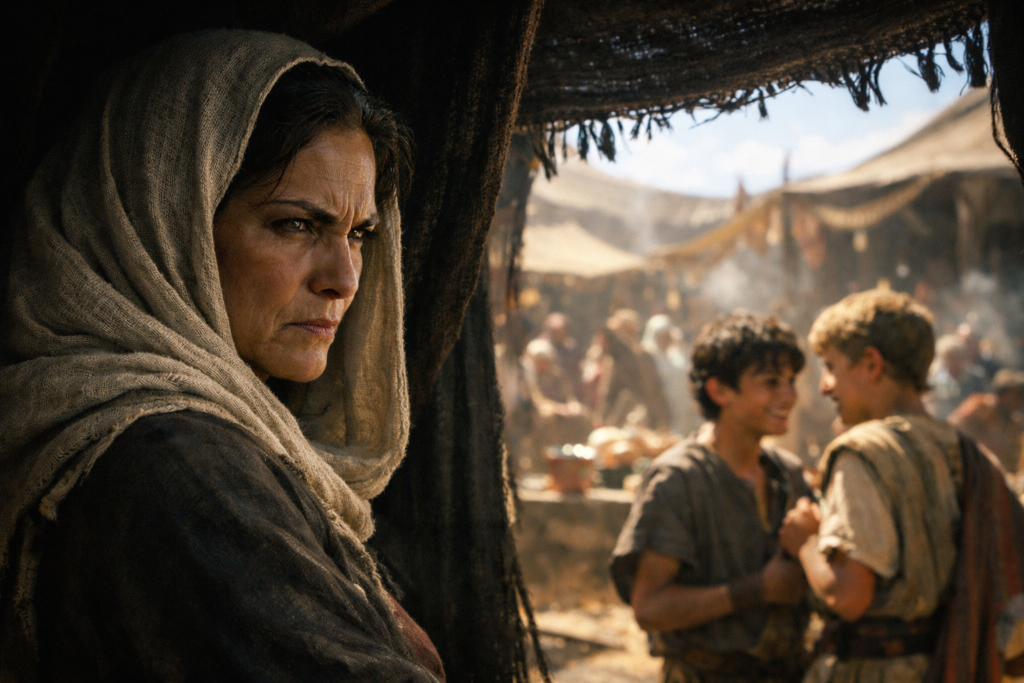
But Sarah quickly realized that having two sons created a new problem. Ishmael, the firstborn, stood in the way of Isaac’s inheritance. During a celebration, Sarah observed Ishmael “mocking” or “playing” with Isaac (Genesis 21:9). The Hebrew word is ambiguous, but Sarah’s interpretation was clear: this boy is a threat.
She went to Abraham with a demand that crushed him: “Get rid of that slave woman and her son, for that woman’s son will never share in the inheritance with my son Isaac” (Genesis 21:10). After fourteen years of raising Ishmael, Abraham faced an unbearable choice.
He sought God’s counsel. God’s response was startling: “Listen to whatever Sarah tells you” (Genesis 21:12). But God added a promise. Ishmael would also become a nation because he was Abraham’s offspring (Genesis 21:13).
The Wilderness And The Well
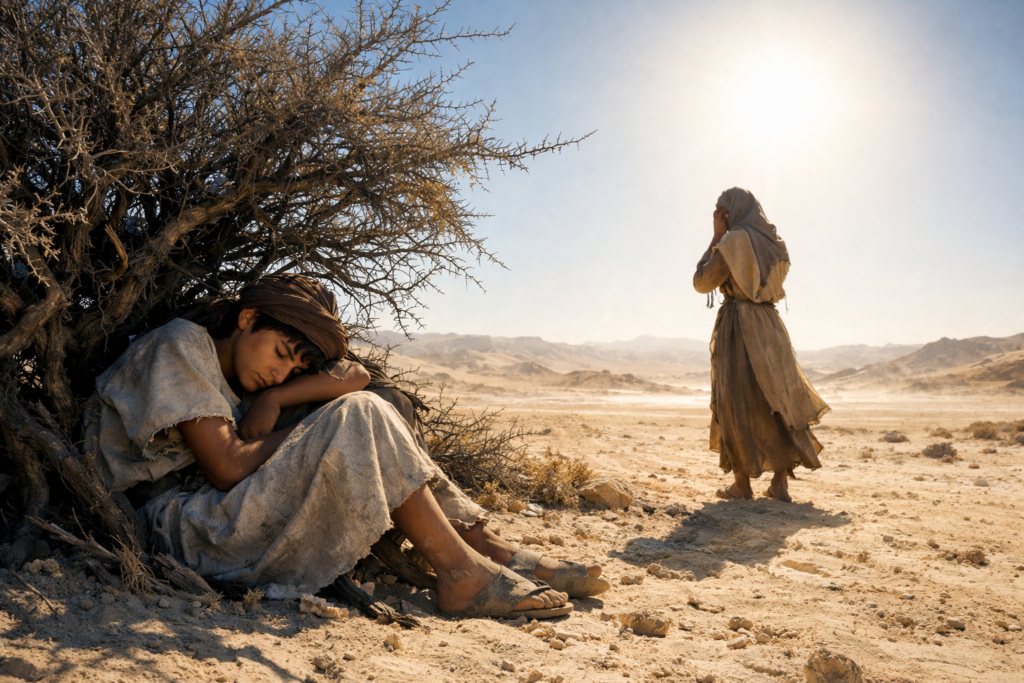
Before dawn, Abraham sent them away with bread and water (Genesis 21:14). The provisions ran out quickly. The desert sun became an executioner. Ishmael, now a teenager, began to die from dehydration.
Hagar faced the choice no mother should face. She placed her son under a bush and walked away, sitting about a bow shot’s distance. “I cannot watch the boy die,” she thought, and she began to weep (Genesis 21:16).
This is where most of us would write the end of the story. Abandoned. Forgotten. Dying in the wilderness because of someone else’s jealousy and insecurity.
But God heard the boy crying (Genesis 21:17).
An angel called to Hagar: “What is the matter, Hagar? Do not be afraid. God has heard the boy crying as he lies there. Lift the boy up and take him by the hand, for I will make him into a great nation” (Genesis 21:17-18). Then God opened her eyes, and she saw a well of water that had been there all along (Genesis 21:19).
Hagar gave Ishmael water. He drank. He lived. The boy who was left to die in the wilderness grew into a man whose descendants would indeed become a nation (Genesis 21:20-21).
What This Means For You
Here’s what wrecks me about this story: Hagar was used, abused, and discarded by people who claimed to follow God. She was a pawn in someone else’s attempt to fulfill a divine promise. She suffered for doing exactly what was asked of her. Yet God never forgot her. He saw her when no one else did. He heard her son when death was seconds away.
Therefore, if you feel used by people in the church, God sees you. If you’ve been discarded after serving faithfully, God hears you. If you’re dying in a wilderness that someone else’s decisions created, there’s a well you haven’t seen yet.
But here’s the harder truth: Sarah’s cruelty came from her attempt to engineer God’s promise on her own timeline. She didn’t trust God’s timing, so she created a backup plan that destroyed lives. The greatest damage in the Kingdom often comes from people trying to force God’s hand instead of waiting for his faithfulness.
This story isn’t just about Hagar’s suffering. It’s about the wreckage that occurs when we stop trusting Jesus Christ with the promises he’s made. Jesus himself was rejected, despised, and left to die. But that rejection became the pathway to redemption for everyone who believes (Isaiah 53:3-5, Romans 5:8). On the cross, Jesus experienced the ultimate abandonment, crying out “My God, my God, why have you forsaken me?” (Matthew 27:46) so that we would never be truly forsaken.
The well was always there in Hagar’s wilderness. She just needed her eyes opened to see it. Your breakthrough might already exist. You might just need Jesus to open your eyes to his provision. Put your faith in him, not in human promises or plans. He is the God who sees. He is the God who hears. He is the God who provides wells in the wilderness when everyone else walks away.
The same God who heard a dying boy’s cry in the desert hears yours today. And like Hagar, when you encounter him in your worst moment, you’ll discover that being seen by God matters more than being valued by people. That’s not religious comfort. That’s the only thing that will sustain you when everything else falls apart.

Other Articles

When God sees a warrior but you see a coward
A Mother’s Vigil That Changed a King’s Heart