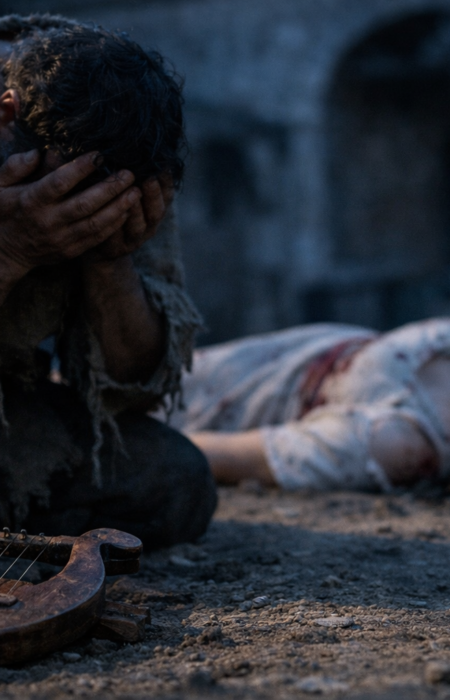
She came out dancing.
Tambourines in hand, joy lighting up her face, she burst through the doorway to celebrate her father’s return from war. But the moment Jephthah saw her, his victory turned to ash. He tore his clothes and cried out in anguish. His daughter stopped mid-step. Something was terribly wrong.
This isn’t a story about a bad decision. It’s a story about the cost of treating God like a vending machine. And the price was paid by someone who never made the deal.
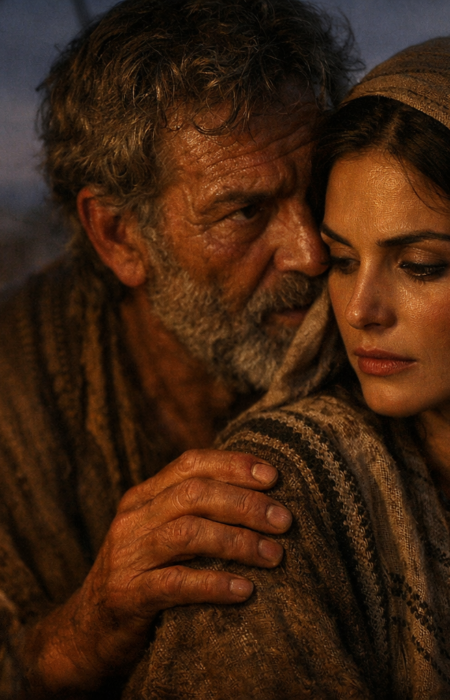
Jephthah’s story started with rejection. Born to a prostitute in Gilead, he grew up knowing he didn’t belong. His half-brothers made sure of it. “You’re not getting any inheritance in our family,” they told him, their words dripping with contempt. “You’re the son of another woman” (Judges 11:2). They drove him out. He had no home, no family, no future.
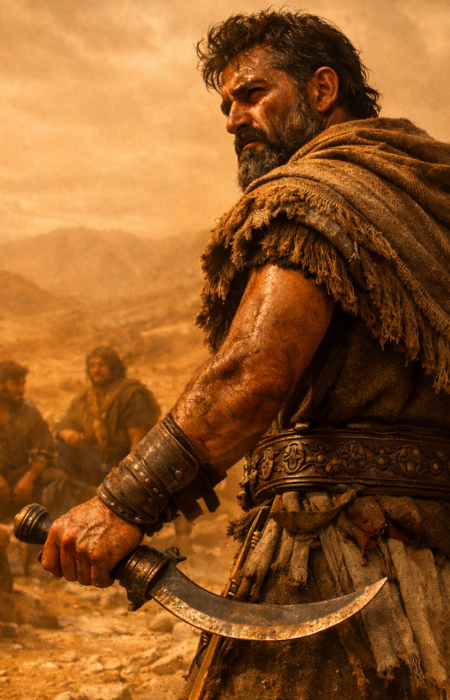
Therefore, he ran to the land of Tob. There, he gathered a band of outcasts around him. Men who had been pushed to the margins. Men who had nothing left to lose. Under Jephthah’s leadership, they became known for their strength. The reject had built himself a reputation.
But back in Gilead, trouble was brewing. The Ammonites were pressing in, threatening to destroy everything. The elders of Gilead were desperate. They needed a warrior. They needed someone who knew how to fight when the odds were stacked against him. Suddenly, they remembered the man they had thrown away.
They traveled to Tob and stood before Jephthah with an offer. Come lead us against the Ammonites.
Jephthah looked at them. These were the same people who had rejected him. The same community that had stood by while his brothers stripped him of his inheritance and dignity. “Didn’t you hate me?” he asked. “Didn’t you drive me from my father’s house? Why come to me now when you’re in trouble?” (Judges 11:7).
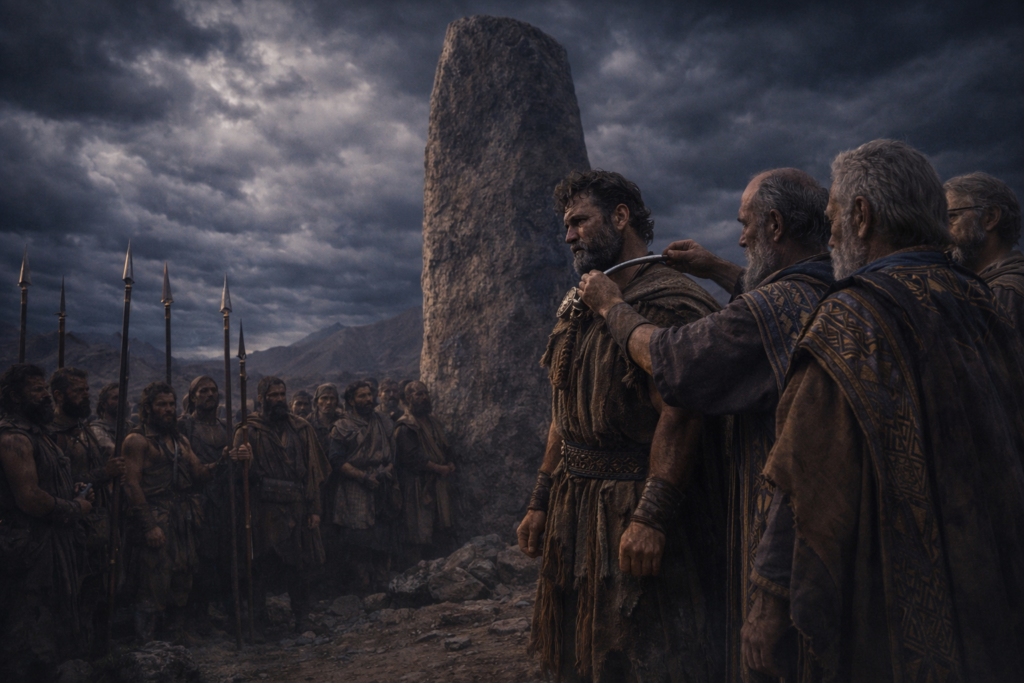
The elders didn’t deny it. “Nevertheless, we’re turning to you now,” they said. “Fight for us, and you’ll be head over all of us in Gilead” (Judges 11:8).
Jephthah agreed. The outcast would become the leader. But this opportunity would cost him everything.
When Fear Makes Deals With God
Before the battle, Jephthah tried diplomacy. He sent messengers to the Ammonite king, laying out Israel’s historical claim to the land. The negotiations went nowhere. War was coming, and Jephthah knew it.
The Bible tells us that “the Spirit of the Lord came on Jephthah” (Judges 11:29). God was with him. Divine power was moving through him. He had everything he needed for victory. But Jephthah didn’t believe it was enough.
Therefore, he made a vow. Standing before the Lord, he said, “If you give the Ammonites into my hands, whatever comes out of the door of my house to meet me when I return in triumph will be the Lord’s, and I will sacrifice it as a burnt offering” (Judges 11:30-31).
Read that again. God had already given him His Spirit. Victory was already assured. But Jephthah tried to bargain anyway.
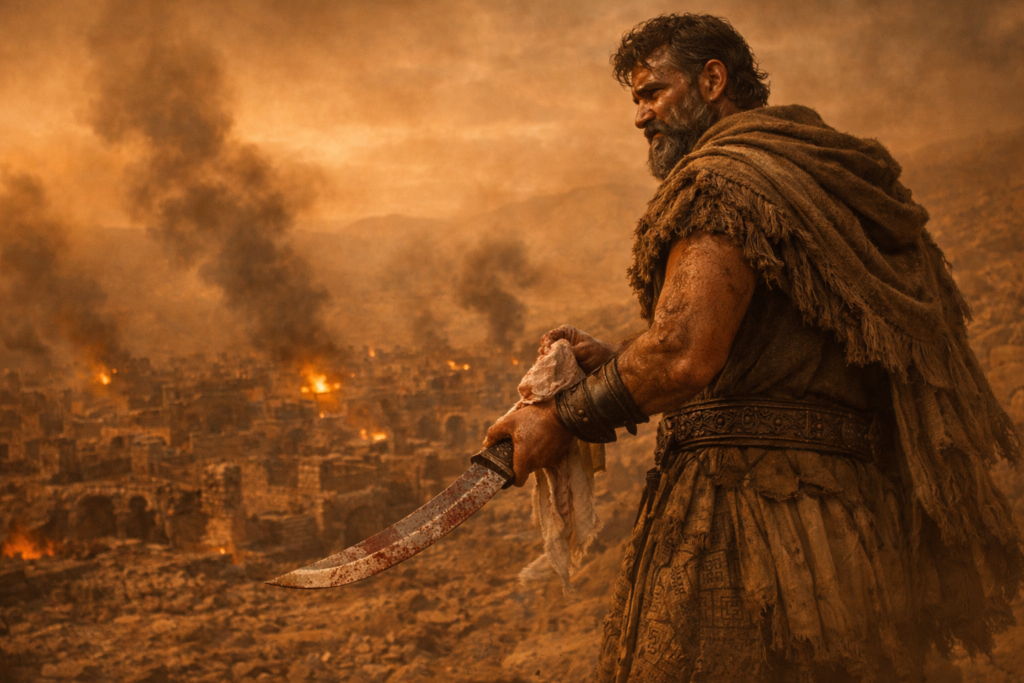
This is what fear does. It turns faith into negotiation. It treats God like a transaction. “If you do this, then I’ll do that.” It forgets that God doesn’t need our deals. He needs our trust.
The battle came. Jephthah led the charge. The Israelites devastated the Ammonites, capturing twenty towns and subduing them completely (Judges 11:33). The victory was total. Everything Jephthah had hoped for came true.
But the cost was waiting at home.
The Dance That Stopped
As Jephthah approached Mizpah, his heart must have been racing. He was returning as a hero. The outcast had become the deliverer. But somewhere in that moment of triumph, he remembered his vow. Whatever comes out first would be sacrificed.
He probably expected a goat. Maybe a sheep. Something from the household animals that roamed freely in and out of the courtyard.
Instead, his daughter came dancing through the door.
His only child. His only connection to a future that might remember his name. She came with tambourines and celebration, thrilled that her father had returned victorious. She had no idea she was walking into her own death sentence.
Jephthah tore his clothes. “Oh no, my daughter,” he cried out. “You have brought me down and I am devastated. I have made a vow to the Lord that I cannot break” (Judges 11:35).
Notice what he said. “You have brought me down.” Even in his grief, he couldn’t fully own what he had done. The vow was his. The deal was his. But the consequence fell on her.
His daughter could have raged. She could have run. She could have begged her father to find another way. But she didn’t. She stood before him and said, “My father, you have given your word to the Lord. Do to me just as you promised” (Judges 11:36).
She understood something her father didn’t. This wasn’t about her. This was about the brokenness of trying to control God. And she would bear the weight of that brokenness with courage.
But she asked for one thing. “Give me two months to roam the hills and weep with my friends, because I will never marry” (Judges 11:37).
Jephthah agreed. Therefore, she went into the wilderness with her companions. For two months, they mourned together. They didn’t mourn her death alone. They mourned the life she would never live. The children she would never have. The legacy that would end with her.
When the two months were over, she returned. And Jephthah “did to her as he had vowed” (Judges 11:39).

The Tradition That Remembers
The story doesn’t end there. The daughters of Israel created a tradition. Every year, for four days, the young women would go out into the hills to commemorate Jephthah’s daughter (Judges 11:40). They made sure her story wasn’t forgotten. They made sure her sacrifice was remembered.
Because here’s what we miss: This story isn’t in the Bible to teach us that God honors foolish vows. It’s there to show us what happens when we treat Him like He’s on our payroll. When we try to manipulate divine power with our promises. When we forget that God isn’t looking for deals. He’s looking for trust.
Jephthah had the Spirit of God. He had divine backing. Victory was already guaranteed. But he tried to secure it with a transaction. And his daughter paid the price.
How many times do we do the same thing? We make promises to God like we’re negotiating a contract. “If you heal this, I’ll serve you better.” “If you give me this job, I’ll be more generous.” “If you fix this relationship, I’ll finally get serious about my faith.” We bargain because deep down, we’re not sure God is actually good. We’re not sure He’s actually enough.
But Jesus didn’t come to make deals with us. He came to die for us. There was no transaction. No negotiation. Just love poured out while we were still broken, still rejecting Him, still driving Him out like Gilead drove out Jephthah (Romans 5:8). The cross wasn’t a vow we manipulated out of God. It was grace we could never earn.
Faith in Jesus Christ isn’t about what we promise to do for God. It’s about trusting what He’s already done for us. It’s laying down the bargaining. It’s releasing the control. It’s believing that His Spirit is enough, even when the battle feels uncertain.
Jephthah’s daughter never got to dance again after that day. But the women of Israel danced for her. They remembered her courage. They honored her willingness to bear the cost of someone else’s broken faith.
And maybe that’s the call for us today. To stop making vows we can’t keep. To stop treating God like He needs our deals. To trust that the Spirit He’s already given us is enough. To come to Jesus not with bargains, but with surrender.
Because the girl who danced into darkness teaches us something the man who made the vow never learned: God doesn’t want our negotiations. He wants our hearts. And when we give Him that, we discover He’s been faithful all along.
Stop bargaining. Start trusting. The Spirit of the Lord is already with you.

Other Articles
How One Selfish Lie Led to His Wife’s Suffering
How One Forbidden Night Led to Ruthless Murder