You know what nobody talks about? How Abraham, the father of faith, watched his wife walk into another man’s bedroom. Twice.
This isn’t the Sunday school version. This is the story your pastor probably glossed over because it’s uncomfortable, messy, and raises questions we’d rather not answer. But here’s the thing: the most transformative truths in Scripture are usually the ones that make us squirm.
Abraham had a problem. His wife Sarah was so beautiful that he was convinced her appearance would get him killed. So when famine drove them to Egypt, he hatched a plan. “Tell them you’re my sister,” he said (Genesis 12:13). Sarah agreed. The lie worked. Sort of.
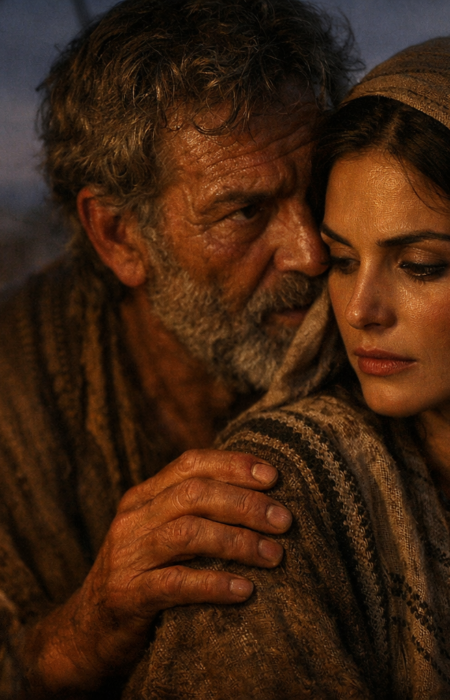
Pharaoh’s officials saw her and their jaws dropped. Word spread through the palace like wildfire. Within days, Sarah was taken to become Pharaoh’s wife. The text doesn’t sugarcoat this. It says Pharaoh “took her” (Genesis 12:15). Abraham received livestock, servants, and wealth as compensation for his “sister.” He got rich while his wife disappeared behind palace walls.
But then God intervened. A plague struck Pharaoh’s household with such severity that the king knew something supernatural was happening. When he connected the dots, Pharaoh was furious. “What have you done to me?” he demanded. “Why didn’t you tell me she was your wife?” (Genesis 12:18-19). The pagan king had more integrity than God’s chosen patriarch.
Therefore Abraham and Sarah were expelled from Egypt, keeping their newfound wealth but carrying the weight of what had happened. Among the servants Abraham acquired was an Egyptian woman named Hagar, who would later become the mother of Ishmael and create complications that echo through history to this day.
You’d think Abraham learned his lesson. You’d be wrong.

When Fear Creates Déjà Vu
Years passed. Abraham and Sarah were now in their late eighties. Sarah, despite her age, remained remarkably beautiful. How is this possible? In that era, lifespans stretched to extraordinary lengths. Sarah would eventually live to 127 years old. At ninety, she was essentially middle-aged by ancient standards, a woman in the prime of mature beauty.
But Abraham’s old fears hadn’t aged at all.
When circumstances forced them to settle in Gerar, Abraham’s anxiety returned. Once again, he told Sarah to claim she was his sister. Once again, a king took her. This time it was Abimelech, king of the Philistines (Genesis 20:2).
Before the marriage could be consummated, God appeared to Abimelech in a dream with a chilling message: “You are as good as dead because of the woman you have taken; she is a married woman” (Genesis 20:3).
Abimelech protested his innocence. He hadn’t touched her. He’d acted in good faith. God acknowledged this: “Yes, I know you did this with a clear conscience. So I have kept you from sinning against me. That is why I did not let you touch her” (Genesis 20:6).
At dawn, Abimelech confronted Abraham. “What have you done to us? How have I wronged you that you have brought such great guilt upon me and my kingdom?” (Genesis 20:9). Again, the pagan king demonstrated more righteousness than the prophet.
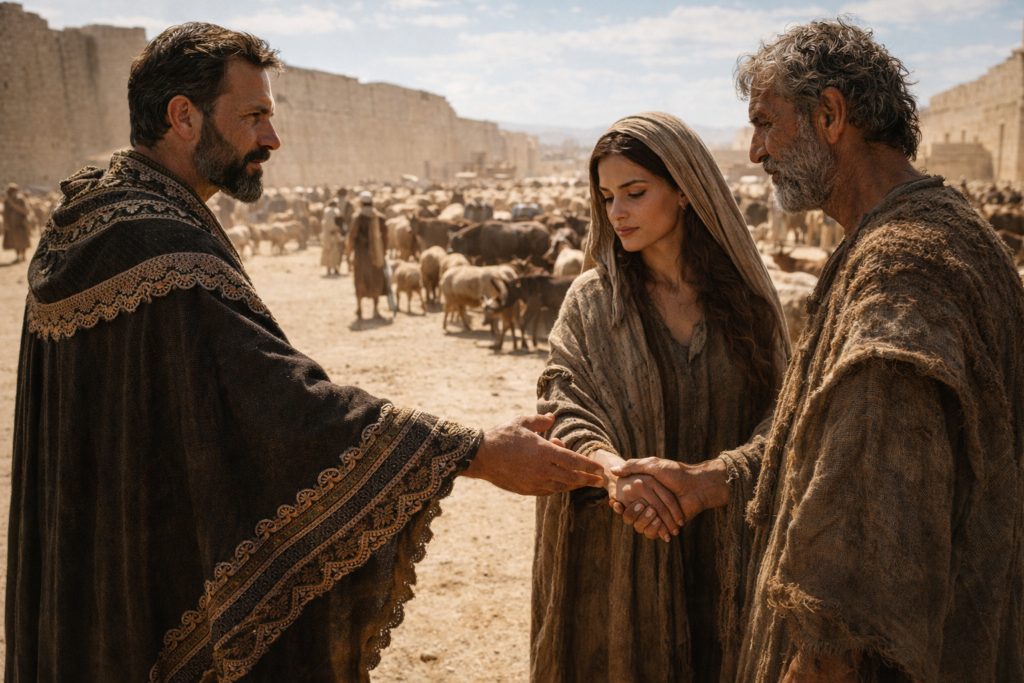
Abraham’s excuse was technical and weak: “She really is my sister, the daughter of my father though not of my mother; and she became my wife” (Genesis 20:12). He admitted he’d told her long ago, “This is how you can show your love to me: Everywhere we go, say of me, ‘He is my brother'” (Genesis 20:13).
Therefore Abimelech gave Abraham sheep, cattle, and servants. He returned Sarah and declared, “My land is before you; live wherever you like” (Genesis 20:15). Abraham prayed for Abimelech’s household, and God healed them.
But the pattern wasn’t finished yet.
Like Father, Like Son
Isaac grew up hearing these stories. He knew what his father had done. He knew the fear that had driven Abraham’s decisions. And when famine struck during his own lifetime, Isaac found himself in Gerar with his beautiful wife Rebekah (Genesis 26:1-7).
The fear was hereditary.
“She is my sister,” Isaac told the men of the place (Genesis 26:7). The lie came easily, practiced in his father’s house. Everyone believed him. Time passed. Isaac felt safe.
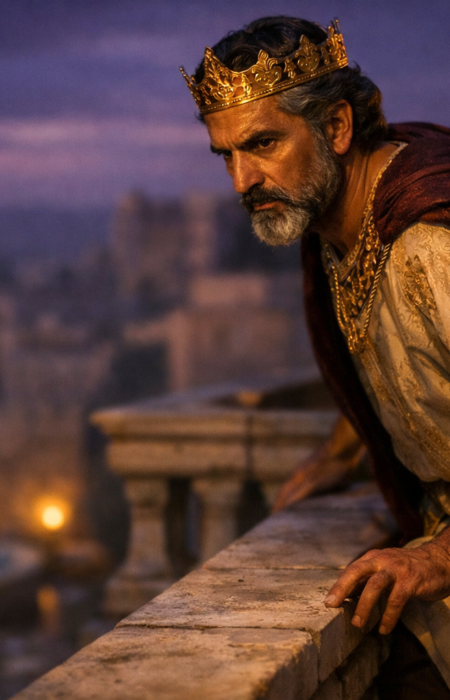
Until King Abimelech, looking out his window one day, saw Isaac caressing Rebekah in a way that left no doubt about their true relationship (Genesis 26:8). Abimelech summoned him immediately. “She is really your wife! Why did you say, ‘She is my sister’?”
Isaac’s answer echoed his father’s words: “Because I thought I might lose my life on account of her” (Genesis 26:9).
But Abimelech had learned from his father’s mistakes. He responded with righteous anger: “What is this you have done to us? One of the men might well have slept with your wife, and you would have brought guilt upon us” (Genesis 26:10). He issued a public decree: “Anyone who harms this man or his wife shall surely be put to death” (Genesis 26:11).
Therefore Isaac and Rebekah lived in safety. Isaac prospered greatly during that year, his flocks and herds multiplying until he became wealthy (Genesis 26:12-14). But the prosperity came despite his deception, not because of it.
The Truth That Sets Us Free
Here’s what these three stories reveal: control is a counterfeit for trust.
Abraham believed he was protecting himself and his wife. Instead, he put Sarah in the very situation he feared, subjecting her to the advances of powerful men while he stood by helplessly. His schemes didn’t protect anyone. They just transferred the danger from imagined threats to real ones.
The pattern repeated because the underlying problem remained unaddressed. Fear had more authority in Abraham’s life than faith. And Isaac inherited that fear like a family heirloom, complete with the same disastrous results.
But notice something remarkable in all three accounts: God intervened. Every single time. Pharaoh’s household was struck with plagues. Abimelech received a warning dream. Even when Isaac’s deception was discovered, God had already been orchestrating protection.
The men who trusted in schemes needed rescue. The God they failed to trust provided it anyway.
This is where Jesus Christ enters the conversation, not as an addendum but as the culmination of everything these stories point toward. Abraham, Isaac, and Jacob form a genealogical line that leads directly to Jesus (Matthew 1:1-2). The patriarchs who struggled with control and deception ultimately become part of the story of perfect trust and truth incarnate.
Jesus, facing real threats not imagined ones, trusted His Father completely. In Gethsemane, He prayed, “Not my will, but yours be done” (Luke 22:42). He didn’t scheme or manipulate. He walked directly into suffering because He trusted the outcome to God. And through that trust, through that surrender, redemption came for all of us.
The transformation these stories demand is brutal in its simplicity: surrender your schemes. Your careful plans to protect yourself often cause the very harm you’re trying to avoid. Your refusal to trust God with your circumstances doesn’t demonstrate wisdom but reveals where your faith actually resides.
Therefore, when fear tells you to compromise, to lie, to manipulate circumstances for your protection, remember Abraham watching Sarah disappear into Pharaoh’s palace. Remember Isaac’s hollow excuse to Abimelech. Remember that their schemes accomplished nothing except exposing their lack of trust.
But also remember that God intervened. He protected when the patriarchs failed to trust. He was rescued when their plans collapsed. And He does the same for you.
Faith in Jesus Christ means releasing control, trusting that the God who intervened for Abraham will intervene for you. It means admitting that your beautiful schemes are just fear dressed in strategy. It means believing that God’s protection doesn’t require your deception.
What beauty in your life has become a burden because you’re trying to protect it through control instead of trust? The answer to that question might be the first honest conversation you’ve had with God in years.


The Night Israel Lost Its Soul
How One Binding Vow Led to Ruthless Sacrifice