God rested on the seventh day. But what does that really mean?
We’ve all felt that crushing weight of exhaustion that comes from pushing too hard, working too long. Therefore, we understand rest as the absence of labor, a temporary reprieve from our daily grind. But God’s rest? That’s something entirely different.
The Divine Pause
When Scripture tells us that “God rested on the seventh day,” it’s easy to project our human experience onto the divine. But let’s be clear: the Creator of the universe doesn’t get tired. Isaiah 40 reminds us that “He does not faint or grow weary.”
So what happens when God rests?
Think about that moment when an artist steps back from their canvas, eyes filled with satisfaction at what they’ve created. Or when a builder stands before a completed house, surveying every perfect detail with pride. That pause, that moment of deep joy and satisfaction, that’s divine rest.
God wasn’t recovering from fatigue. Therefore, we must understand His rest as something profoundly different. It was a moment of divine delight, of perfect contentment in what He had accomplished. As Zephaniah 3:17 beautifully puts it, “He will take great delight in you… he will rejoice over you with singing.”
But why seven days? Why does every culture on earth operate on a seven-day week? The month follows the lunar cycle. The year tracks the earth’s journey around the sun. But the week? There’s no astronomical reason for seven days.
Therefore, we find ourselves circling back to this profound moment in Genesis, the divine pattern established at creation itself.

The Human Connection
“The Lord God formed man from the dust of the ground.”
There’s something profoundly humbling about this. The Hebrew word for man, “Adam,” comes from “adamah” earth. It’s as if God named us to remind us of our origins. But he didn’t stop there.
“He breathed into his nostrils the breath of life.”
This is what sets humanity apart. Not our strength, the lion has more. Not our speed, the cheetah outpaces us. But this divine breath, this spiritual connection that makes us immortal beings.
As Augustine so beautifully expressed: “You have made us for yourself, O Lord, and our hearts are restless until they rest in you.”

But we’ve been searching for fulfillment everywhere else, haven’t we? Therefore, we experience that deep restlessness Solomon described in Ecclesiastes, trying everything under the sun only to conclude: “Fear God and keep his commandments, for this is the whole duty of man.”
The Christ Connection
The garden in Eden wasn’t just a historical location, it was prophetic. From it flowed a river that divided into four streams: Pishon, Gihon, Tigris, and Euphrates. But what if these weren’t just geographic markers?
The Pishon, circling the land of gold, points to Christ in Matthew’s Gospel, the King to whom the Magi brought gold.
The Gihon reminds us of Mark’s servant King, who took the form of a slave.
The Tigris, flowing east toward Assyria (Israel’s enemy), reflects Luke’s emphasis on Christ’s grace extending even to enemies.
The Euphrates, the “overflowing river,” echoes John’s portrait of the Word made flesh who dwelt among us.
Four rivers from one source. Four gospels about one Christ.
But the most remarkable connection appears in Revelation’s final chapter. There again we find a river and the tree of life, not literal foliage and water, but powerful symbols of Christ Himself and His Spirit flowing through us.
“Whoever believes in me, as Scripture has said, rivers of living water will flow from within them.” Jesus was speaking about the Spirit, that endless source of divine life available to all who come to Him.
Therefore, we find ourselves invited to this true rest, not just a day of the week, but a Person. “Come to me, all you who are weary and burdened,” Jesus says, “and I will give you rest.”
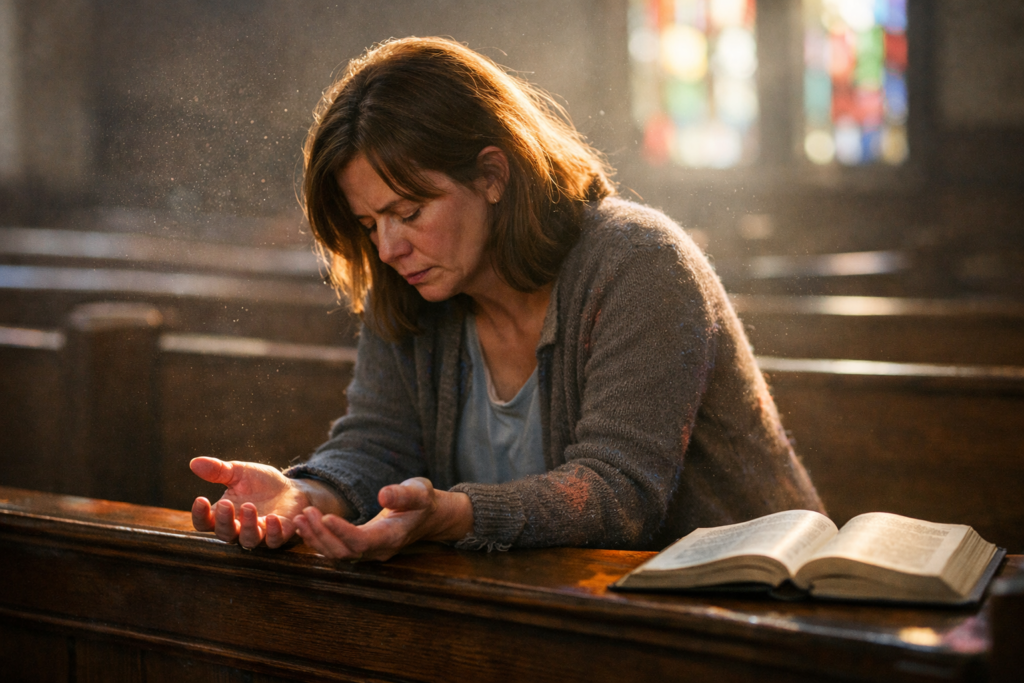
Finding True Rest in a Restless World
The Sabbath was merely a shadow. But Christ is the substance. We don’t need to debate which day is holy Sunday or Saturday, because we’ve entered a new creation. We’re no longer bound by the old covenant signs given specifically to Israel.
Therefore, our rest isn’t found in time off but in time with Him. True Sabbath is experiencing Christ’s presence, allowing His Spirit to flow through us like those rivers in Eden’s garden.
In our frantically busy world, where burnout is epidemic and anxiety commonplace, this message resonates more than ever. We weren’t designed to run endlessly on our own power. We were made for communion with our Creator.
But to experience this rest, we must stop trying to earn what can only be received as a gift. Therefore, lay down your self-salvation projects. Stop proving your worth. Begin simply being with the One who delights in you.
Like that seventh day when God looked at all He had made and called it “very good,” you too can experience the profound contentment that comes not from what you do, but from who you are.
For in Christ, every day becomes a Sabbath, a chance to rest in divine love, to delight in His presence, and to find your true home in Him.
And that’s a rest that never ends.


Most Christians live with half-hearted commitments
You’re Not Who You Think You Are