Every city has a moment when it crosses a line it cannot cross. Gibeah had that moment. The violence that unfolded there wasn’t just brutal. It revealed something deeper about what happens when a nation forgets who it belongs to.
This isn’t a story we tell often. Judges 19 through 21 contain events so disturbing that we’d rather skip past them entirely. Therefore, we miss what God placed in Scripture for us to see: a mirror reflecting what our lives become when we remove Him from the center.
When No One Is Watching
“In those days Israel had no king” (Judges 17:6). The Book of Judges opens and closes with this haunting refrain. A Levite man living in the hill country of Ephraim took a concubine from Bethlehem in Judah (Judges 19:1). She was unfaithful and returned to her father’s house, where she stayed for four months.
The Levite went after her. He wanted her back. Her father welcomed him warmly, perhaps too warmly, insisting he stay another night, then another, then another (Judges 19:4-9). Hospitality became delayed. Eventually the Levite said enough. He gathered his concubine and servant and left Bethlehem as the day grew late.
They traveled north. As evening approached, they neared Jebus, the city that would later become Jerusalem. The servant suggested they stop, but the Levite refused. “We won’t turn aside into the city of foreigners, who are not Israelites” (Judges 19:12). He wanted to reach Gibeah or Ramah, Israelite towns where they’d surely find welcome.
Therefore, they pressed on. The sun set as they entered Gibeah, a town belonging to the tribe of Benjamin. They sat in the town square. No one offered them shelter. In a culture where hospitality was sacred, this silence was the first warning sign.
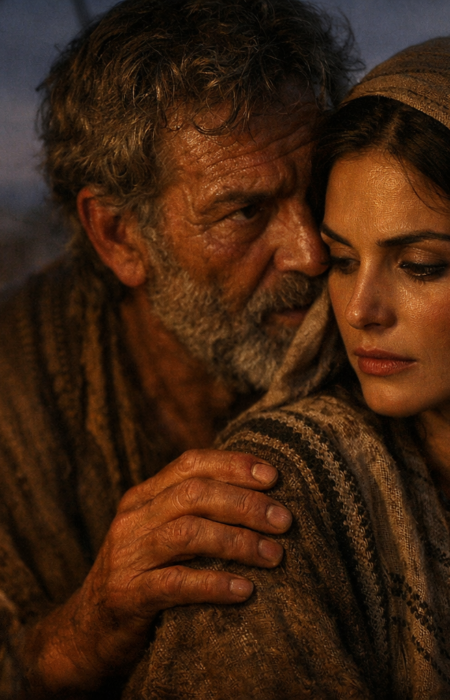
An old man returning from the fields saw them and asked why they sat exposed in the square (Judges 19:17). The Levite explained their situation. The old man immediately invited them to his home, insisting they not spend the night in the square. He brought them in, fed their donkeys, and provided water for washing.
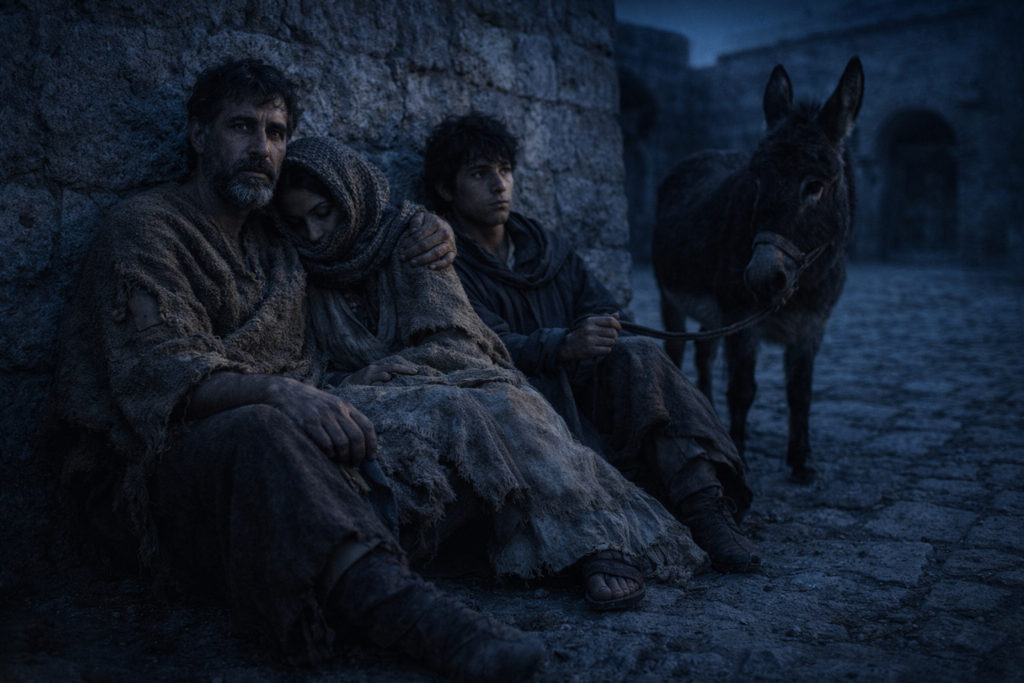
But while they were enjoying themselves, wicked men of the city surrounded the house and pounded on the door (Judges 19:22). They shouted to the old man, “Bring out the man who came to your house so we can have sex with him.”
The parallels to Sodom and Gomorrah are unmistakable (Genesis 19:4-5). The sin that destroyed those cities had taken root in an Israelite town. The old man went outside and begged them, “No, my friends, don’t be so vile. Since this man is my guest, don’t do this outrageous thing” (Judges 19:23).
Then he made an offer that revealed how deeply corruption had spread: “Look, here is my virgin daughter, and his concubine. I will bring them out to you now, and you can use them and do whatever you wish. But as for this man, don’t do such an outrageous thing” (Judges 19:24).
The men refused to listen. Therefore, the Levite took his concubine and pushed her outside to them. They raped her and abused her throughout the night until morning. At daybreak they let her go (Judges 19:25).
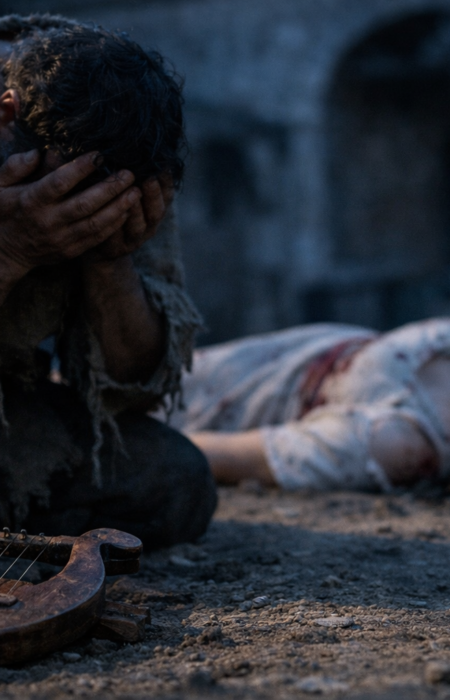
She made it back to the house and collapsed at the door, her hands on the threshold (Judges 19:27). When morning came, the Levite opened the door to continue his journey. There she lay. He said to her, “Get up; let’s go.” But there was no answer. She was dead (Judges 19:28).

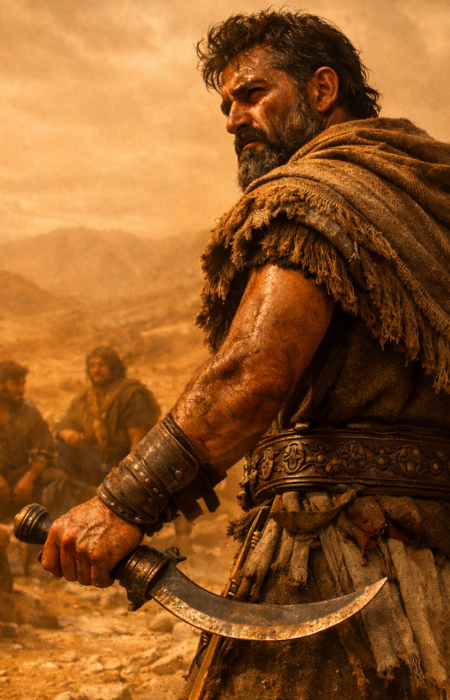
What he did next was calculated to shock: he took a knife and cut her body into twelve pieces, limb by limb, and sent them throughout Israel (Judges 19:29). Each tribe received a portion along with the message of what had happened.
Everyone who saw it said, “Such a thing has never been seen or done, not since the day the Israelites came out of Egypt. Just imagine! We must do something! So speak up!” (Judges 19:30).
The War Nobody Won
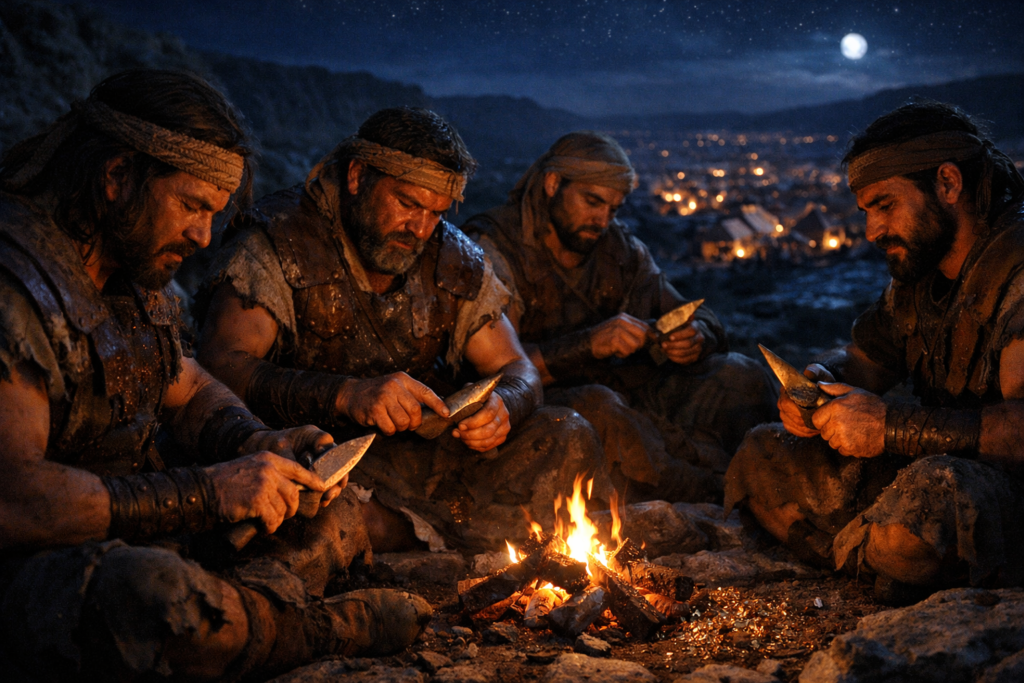
The tribes gathered. Four hundred thousand soldiers assembled, united in outrage (Judges 20:2). They demanded Benjamin hand over the guilty men of Gibeah so justice could be served.
Benjamin refused. Therefore, civil war erupted. Brother fought brother. The first day, Benjamin killed twenty-two thousand Israelites (Judges 20:21). The second day, eighteen thousand more fell (Judges 20:25). Twice the Israelites inquired of the Lord, and twice they attacked, but the casualties mounted.
On the third day, they finally defeated Benjamin, but at what cost? Twenty-five thousand one hundred Benjamite soldiers died (Judges 20:35). The Israelites also burned their cities and killed their women and children, leaving only six hundred men alive (Judges 20:47-48).
Then came the guilt. The tribes had made a vow: none would give their daughters in marriage to a Benjamite (Judges 21:1). Therefore, they faced a crisis. How could Benjamin survive without women to marry?
One bad decision led to another. They discovered that Jabesh Gilead had not joined the assembly. Therefore, they sent twelve thousand warriors who killed everyone there except four hundred virgin women, whom they gave to the Benjamites (Judges 21:10-12).
But four hundred women for six hundred men? The math didn’t work. Therefore, they devised another plan. They told the remaining two hundred Benjamites about a festival in Shiloh where the daughters of Shiloh would dance. “Go and hide in the vineyards and watch. When the young women of Shiloh come out to join in the dancing, rush from the vineyards and each of you seize one of them to be your wife” (Judges 21:20-21).
And so it happened. Women kidnapped. Families torn apart. The Book of Judges closes with these words: “In those days Israel had no king; everyone did as they saw fit” (Judges 21:25).
The Lesson Written in Blood
You cannot choose your consequences. The men of Gibeah chose violence. Therefore, their entire tribe nearly went extinct. The other tribes chose war. Therefore, they lost forty thousand of their own men and had to live with the blood of their brothers on their hands.
The path away from God is always gradual. No one wakes up one morning and decides to become someone they despise. It happens in small steps, in compromises that seem reasonable at the time, in accountability we avoid because we want our freedom.
Israel had God’s law. They had judges. They had prophets. But they had removed Him from the center of their lives. Therefore, they became people they never intended to be. The further they drifted, the more unthinkable acts became thinkable.
This is the trajectory of every life lived without God at the center. You might think you’d never divorce your spouse, never betray a friend, never compromise your integrity for money or status. But remove accountability and time, and you’ll be shocked at what you’re capable of.
The story doesn’t end in darkness, though. Notice what God allowed: Benjamin was not destroyed. They rebuilt. They had another chance (Judges 21:23). Even in the aftermath of Israel’s most destructive decisions, grace broke through.
But grace doesn’t erase consequences. The women who were kidnapped, the families torn apart, the forty thousand dead soldiers, none of them came back. Sin always costs more than you planned to pay and takes you further than you planned to go.
The King We Actually Need
Jesus Christ spoke directly to this when He said, “Apart from me you can do nothing” (John 15:5). The entire Book of Judges is a case study in what happens when people try to live as if this isn’t true.
You need a King. Not a political leader or a system or a set of rules you follow when convenient. You need Jesus, the One who doesn’t just tell you how to live but gives you the power to actually do it.
The Israelites kept cycling through the same pattern: they’d fall into sin, cry out to God, receive a deliverer, have peace for a while, then fall back into sin. This cycle continued until they finally understood they needed more than occasional rescue. They needed a King who would reign forever.
That King came. He entered a world as broken as Gibeah, as violent as Israel under the judges, as corrupt as our own hearts. And instead of destroying us for our rebellion, He took the destruction on Himself. On the cross, Jesus absorbed the consequences we deserved so we could receive the grace we don’t.
Here’s what you must do: Stop trying to be your own king. You’re terrible at it. Every attempt to live without accountability to God leads you down paths you swore you’d never walk. Therefore, surrender. Tell Jesus you need Him not just as Savior but as Lord, as the King your life has been missing.
Stay close to Him. Read His Word daily. Pray constantly. Surround yourself with people who will ask you hard questions about how you’re really living. Because accountability isn’t restriction, it’s protection. It keeps you from becoming someone you’ll barely recognize.
The story of Gibeah shows us what we’re capable of without God. But the story of Jesus shows us what God is capable of despite us. Choose which story you want to define your life. Choose today, because tomorrow you might be further down the road than you ever intended to travel.
“In those days Israel had no king; everyone did as they saw fit.” Don’t let that be the epitaph of your life. You have a King. His name is Jesus. Therefore, follow Him.

Other Articles
How One Selfish Lie Led to His Wife’s Suffering