You know that feeling when someone calls you something you’re absolutely not? When the gap between who you are and what they see is so wide it’s almost insulting?
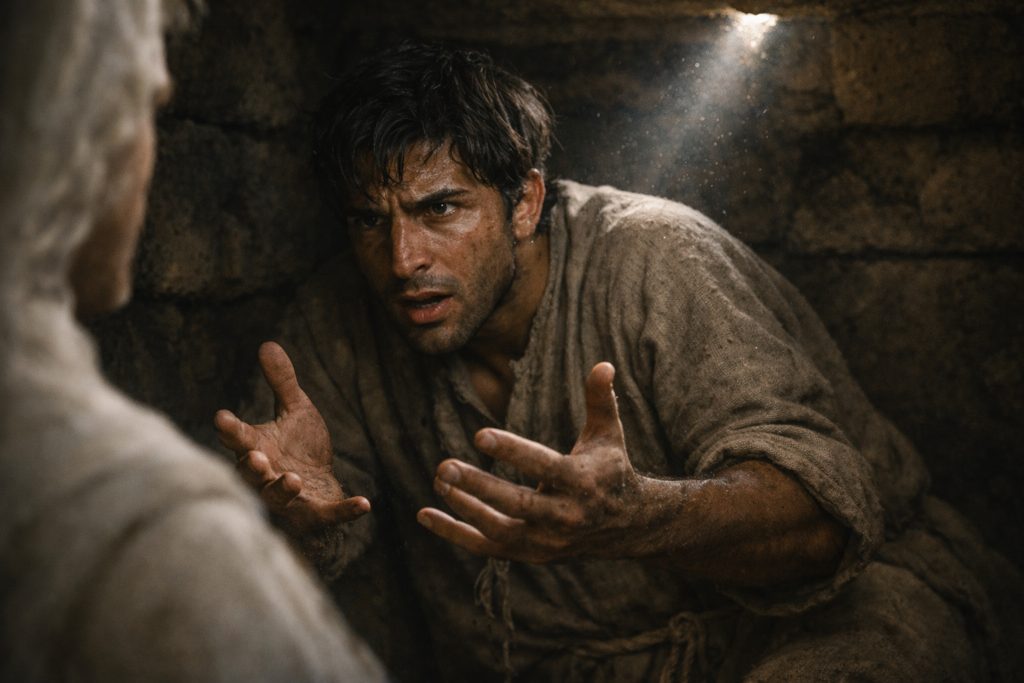
That’s exactly where we find Gideon. Hiding in a wine press, threshing wheat in the dark like a fugitive in his own land. For forty years, the Israelites had enjoyed peace under Deborah’s leadership. But then they did what they always did. They turned away from God, chasing after Baal, and God let them feel the consequences. Every harvest season, the Midianites would descend like locusts, darker than any storm, stripping the land bare. The Israelites were reduced to living in caves, hiding their food, working in secret, terrified of being discovered.
Therefore, Gideon wasn’t just hiding wheat. He was hiding from life itself. His brothers had been killed by Midianite raiders. His people were broken. His nation was oppressed. And in that moment of complete defeat, crouched in the shadows, an angel appeared with the most absurd greeting imaginable.
“The Lord is with you, mighty warrior.”
Mighty warrior? Gideon almost laughed. But instead, he did something brutally honest. He challenged God directly. “If the Lord is really with us, then why is all this happening? Where are all the miracles our ancestors told us about?” (Judges 6:13). It wasn’t faith speaking. It was despair wrapped in sarcasm.
The angel didn’t correct him. He didn’t lecture him about attitude or proper reverence. Instead, he gave Gideon a mission that seemed designed to mock him: “Go in the strength you have and save Israel. Am I not sending you?” (Judges 6:14).
But Gideon wasn’t buying it. “How can I save Israel? My clan is the weakest, and I’m the least in my family” (Judges 6:15). He laid out every reason why this was a terrible idea. Therefore, God gave him a sign. Fire leaped from a rock and consumed Gideon’s offering. And something shifted. The doubt didn’t vanish completely, but it made room for something else: obedience.
The Altar That Changed Everything
God’s first assignment for Gideon wasn’t to fight the Midianites. It was to deal with the enemy within. That night, God commanded him to tear down his father’s altar to Baal and cut down the Asherah pole beside it (Judges 6:25-26). This wasn’t a side quest. It was the mission. Before Gideon could free Israel from external oppression, he had to free them from the internal bondage of false worship.
Gideon was afraid, so he did it at night with ten servants. But he did it. The next morning, the town erupted in rage. They wanted Gideon dead for destroying their idol. But his father, Joash, said something brilliant: “If Baal really is a god, let him defend himself” (Judges 6:31). The logic was undeniable. The idol they had trusted couldn’t even protect its own altar.
Therefore, the very act that should have gotten Gideon killed became the moment his people started to see the truth. False gods demand everything but deliver nothing. And the man who had been cowering in a wine press was now standing as a prophet, calling Israel back to the one true God.
Filled with the Spirit of the Lord, Gideon blew a trumpet, and men from across Israel responded (Judges 6:34-35). An army gathered. But Gideon’s doubt returned. Twice, he asked God for more signs involving a fleece and dew (Judges 6:36-40). God answered both times. Not because Gideon deserved it, but because God’s patience is greater than our fear.
Then came the hardest test. God told Gideon his army was too large. “If I let all of you fight, Israel will boast that their own strength saved them” (Judges 7:2). Therefore, Gideon sent home anyone who was afraid. Twenty-two thousand left. Only ten thousand remained.
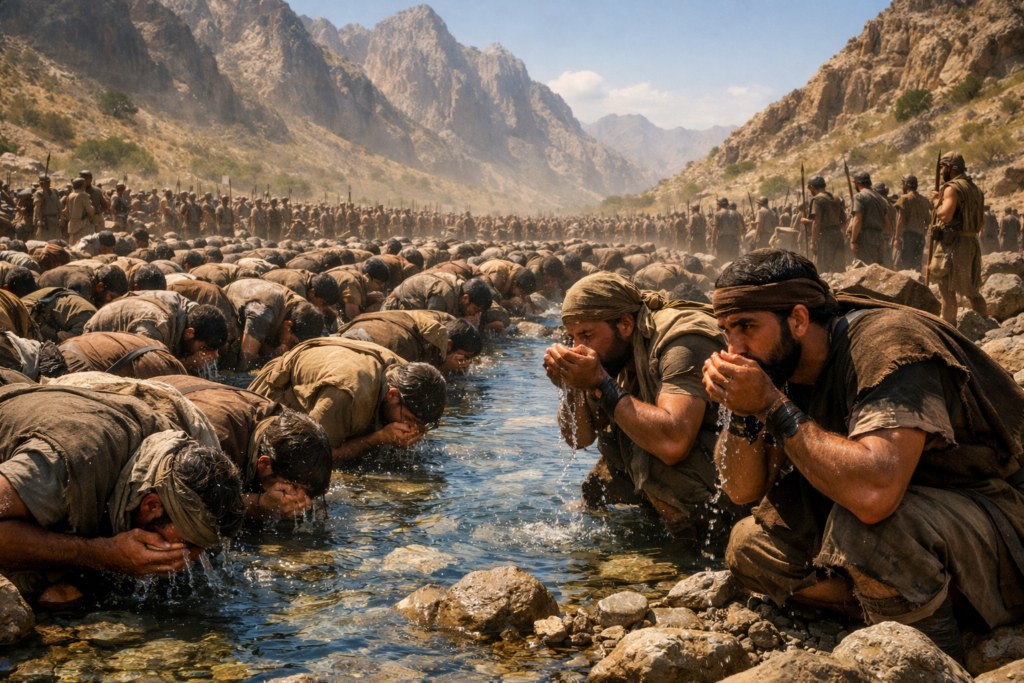
But God said it was still too many. He had Gideon take them to a stream and observe how they drank. Most knelt and buried their faces in the water. Three hundred scooped water with their hands, staying alert, eyes scanning for danger. God said, “With these three hundred men, I will save you” (Judges 7:7).
Think about that. Gideon started with thirty-two thousand. God whittled it down to three hundred. Not because they were the strongest or the bravest, but because God wanted it crystal clear: this victory would be His alone.
The Battle That Wasn’t a Battle
That night, God sent Gideon down to spy on the Midianite camp. There, Gideon overheard a soldier recounting a dream. A loaf of barley bread tumbled into the camp and flattened a tent. His companion interpreted it immediately: “This can only be the sword of Gideon. God has given the Midianites into his hands” (Judges 7:14).
Gideon’s enemies were already defeated in their own minds. Therefore, he returned to his men with fire in his eyes. “Get up! The Lord has delivered the Midianite camp into your hands” (Judges 7:15).
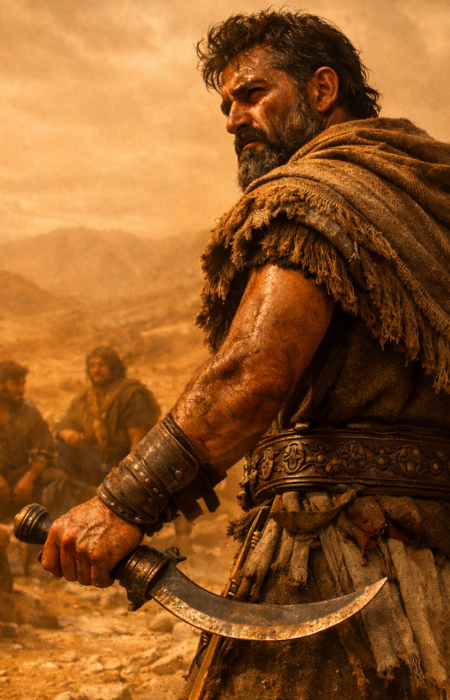
But the strategy was absurd. No swords. No spears. Just trumpets, empty jars, and torches hidden inside them. Gideon divided his three hundred men into three groups and positioned them around the enemy camp. At his signal, they smashed the jars, revealing blazing torches. They blew their trumpets with everything they had. And they shouted, “A sword for the Lord and for Gideon!” (Judges 7:20).
The Midianites woke in chaos. They saw lights everywhere, heard trumpets from every direction, and panicked. In the confusion, they turned on each other, killing their own soldiers. The enemy destroyed itself while Gideon’s men stood and watched God work.
But Gideon’s mission wasn’t finished. The Midianite kings, Zebah and Zalmunna, fled with the remnants of their army. Gideon pursued them relentlessly, and for good reason. These were the men who had murdered his brothers (Judges 8:18-19). This wasn’t just about national deliverance. It was personal.
He crossed the Jordan, chasing them through hostile towns that refused to help him. Eventually, he cornered them at Karkor with only fifteen thousand Midianite soldiers left from an army of one hundred thirty-five thousand. Gideon captured the kings and brought them back. He asked his son Jether to execute them, but the boy hesitated. Therefore, Zebah and Zalmunna taunted Gideon: “Do it yourself” (Judges 8:21). And he did. Justice was served. The oppression ended. His brothers were avenged.
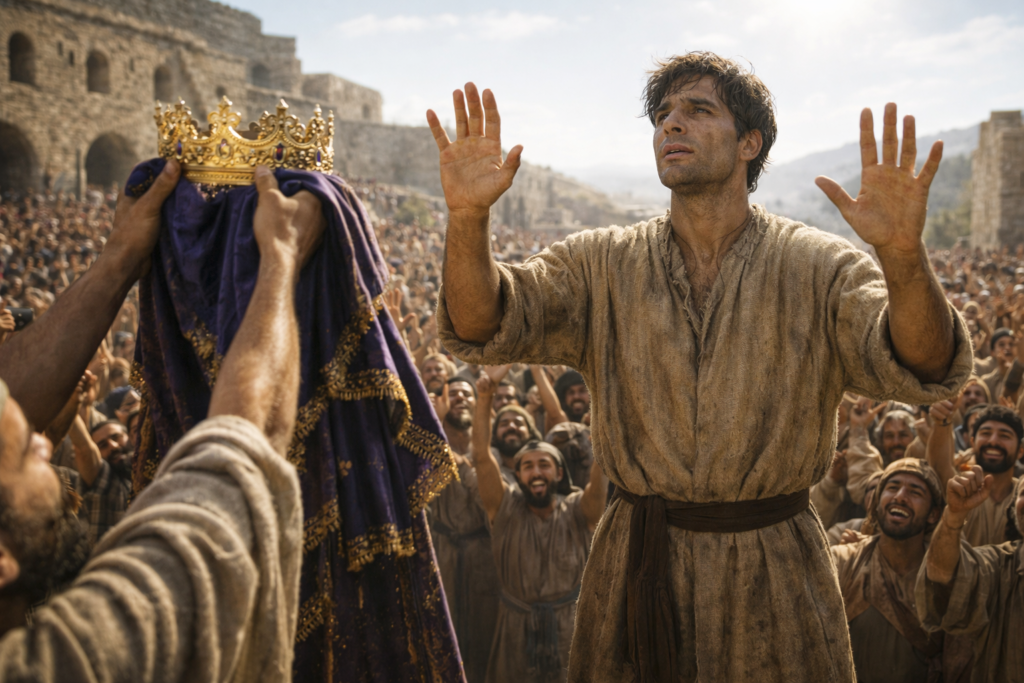
The people wanted to make Gideon king. But he refused. “I will not rule over you, nor will my son. The Lord will rule over you” (Judges 8:23). In that moment, Gideon got it right. The victory wasn’t his to claim. The glory wasn’t his to take. It all belonged to God.
The God Who Uses the Unlikely
Here’s what Gideon’s story demands from us: stop waiting to feel qualified. God doesn’t call the equipped. He equips the call. Gideon was a coward hiding in a wine press, but God called him a mighty warrior. Not because of who he was, but because of who God is.
The enemy you’re facing right now, whether it’s fear, addiction, despair, or doubt, isn’t too big for God. But you need to do what Gideon did. Tear down the false altars in your life. Stop bowing to what cannot save you. Stop trusting in your own strength, your own plans, your own reputation. God is looking for people who will say, “I can’t do this, but You can.”
Jesus Christ is the ultimate fulfillment of what Gideon only pointed toward. Where Gideon needed signs and reassurance, Jesus walked to the cross without hesitation. Where Gideon fought with three hundred men, Jesus conquered sin and death alone. And where Gideon refused a crown, Jesus wore one made of thorns so that we could receive a crown of life.
The same Spirit that filled Gideon to blow that trumpet and rally Israel is available to you right now. Not because you’re brave. Not because you’re strong. But because God is faithful. Place your faith in Jesus Christ, the one who turns cowards into warriors, and watch what He does with your willing obedience.
Because when God reduces your army to three hundred, He’s not setting you up for failure. He’s setting you up to see Him move. And that’s a story worth living.

How One Forbidden Night Led to Ruthless Murder
Abandoned by Saints, Rescued by God