Have you ever wondered why the book of Genesis faces such fierce opposition? Why are the first eleven chapters particularly targeted by skeptics? The answer lies in what Genesis reveals: the true ownership of creation and the initial promise of redemption.
Genesis stands as the cornerstone of Scripture, the foundation upon which the entire biblical narrative is built. But this makes it a prime target for those who seek to undermine God’s Word. The attacks come not merely from outside Christianity but sometimes from within, questioning both its authorship and content.
But what if these attacks reveal something profound about Genesis itself? What if they inadvertently highlight why this book matters so much to our faith?
THE BATTLEFIELD OF BEGINNINGS
Therefore, to understand the significance of Genesis, we must first recognize why it’s under such relentless assault. The enemy’s strategy becomes clear when we examine what Genesis establishes.
First, Genesis declares that the world belongs to God by right of creation. Satan, the great deceiver and his followers despise this revelation of true ownership. They prefer the lie that someone other than the Creator has rightful authority over creation.
Genesis also introduces the promise of “the woman’s offspring”, the One who will crush the serpent’s head. This prophetic thread begins in Genesis 3:15 and weaves throughout Scripture until its fulfillment in Christ, who came “in the fullness of time” to destroy the works of the devil.
But perhaps most threatening to the enemy is that Genesis establishes the divine pattern of sacrifice and redemption. Satan successfully introduced sin into the world, but God immediately revealed His plan, founded on righteousness and justice, to abolish sin’s power.
These foundational truths make Genesis the primary target of spiritual warfare. The book exposes Satan’s original plan to destroy mankind, a plan that would have succeeded if not for Christ’s intervention.
THE FALSE ACCUSATIONS AGAINST MOSES
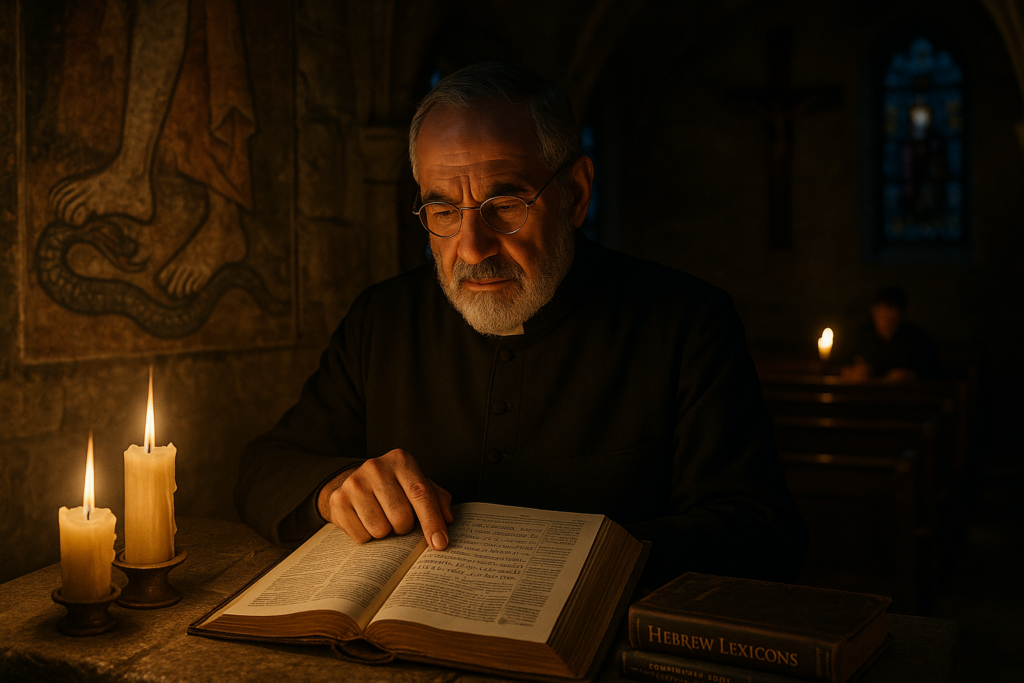
Therefore, it’s not surprising that critics have worked tirelessly to discredit Moses as the author of Genesis, despite Jesus Himself affirming Mosaic authorship.
One of the harshest criticisms emerged after the Protestant Reformation from those who strayed from Christian truth. They claimed Moses didn’t write Genesis, proposing instead that it derived from multiple sources. This became known as the “documentary hypothesis.”
The theory suggests four main sources: the Yahwist (J), the Elohist (E), the Deuteronomist (D), and the Priestly source (P). Proponents point to the varying names for God used throughout Genesis, sometimes “Elohim” and other times “Yahweh” or “Jehovah”, as evidence of different authors.
But this theory crumbles under careful examination. The different names for God aren’t evidence of multiple authors but reveal the richness of God’s character and His relationships. “Elohim” typically appears when describing God’s relationship with all creation, while “Yahweh” (or “Jehovah”) is used to emphasize His covenant relationship with His people.
We see this pattern throughout Scripture. In Judges 7, when a Midianite recounts his dream, he uses “Elohim” (God). But when Gideon responds, he uses “Yahweh” (the LORD), recognizing the personal, covenant relationship between God and Israel.
Critics also claim that Genesis 1-11 isn’t actual history but merely symbolic or mythological stories. Yet Jesus Himself validated these chapters, referring to both Adam and Eve and the global flood as historical events. Seven inspired biblical authors reference the flood, confirming its historical reality.
THE TRUTH BEHIND ANCIENT MYTHS
When skeptics suggest that Moses copied the creation account from Sumerian myths or the flood narrative from the Epic of Gilgamesh, they’ve reversed the actual relationship between these texts.
There are at least 33 flood stories from cultures worldwide, not just the Epic of Gilgamesh. Rather than disproving the biblical account, these widespread stories confirm that a catastrophic flood actually occurred.
After the flood (Genesis 8) and before the Tower of Babel (Genesis 11), humanity remained unified. As people dispersed following Babel, they carried with them the memory of this cataclysmic event, retelling it through their developing pagan worldviews.
These pagan stories don’t invalidate Scripture; rather, they confirm it. They all retain the essential elements: divine judgment upon human wickedness through a catastrophic flood. But they add embellishments and distortions typical of oral transmission across generations.
The biblical account, however, was written through divine inspiration. As Scripture affirms, “Men spoke from God as they were carried along by the Holy Spirit.” Moses didn’t need to borrow from pagan myths; he received revelation directly from the Creator Himself.
A HEART TO HEAR: APPROACHING GENESIS WITH FAITH
How, then, should we approach this foundational book? Not with the critical mind of a teacher who already knows everything, but with the heart of a disciple eager to learn.
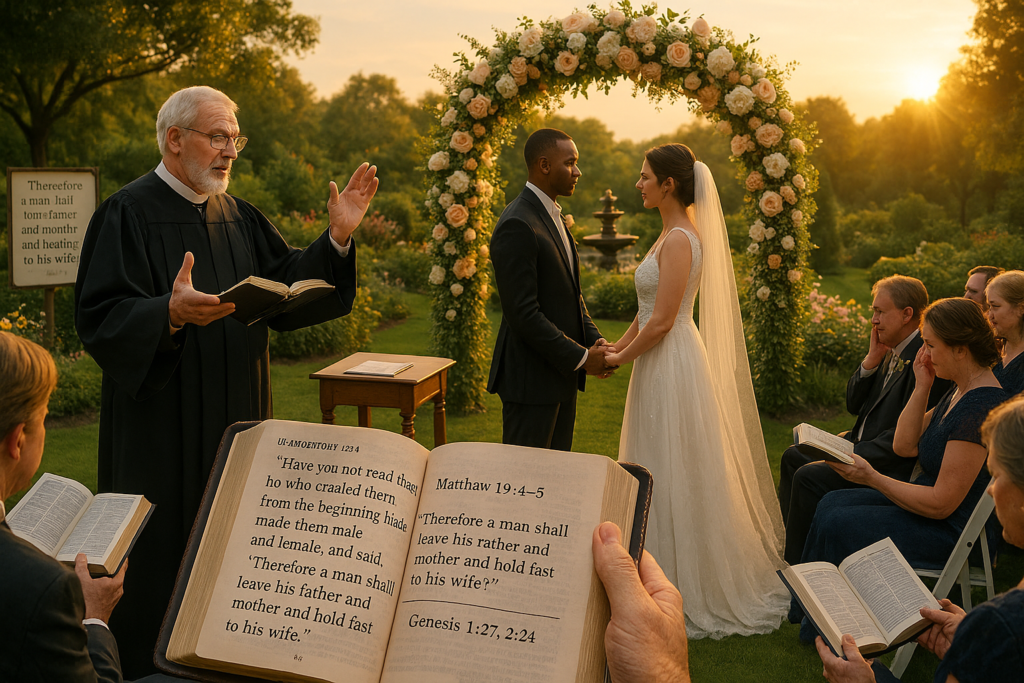
Jesus said, “My sheep hear my voice” (John 10:27). When we come to Scripture, especially Genesis, we should come expecting to hear the voice of our Beloved. As the Song of Songs declares, “The voice of my beloved!” (2:8).
The attacks against Genesis will continue, but they cannot diminish its truth or importance. Jesus promised, “Heaven and earth will pass away, but my words will never pass away” (Matthew 24:35). The book of Genesis remains in our hands today and will endure forever.
If you approach Scripture with humility, asking the Holy Spirit to open your understanding, you’ll discover treasures that skeptics miss. For “the unfolding of your words gives light; it gives understanding to the simple” (Psalm 119:130).

In Genesis, we find not just the beginning of all things, but the seeds of everything God would later reveal in Scripture. It connects beautifully with Revelation, forming a complete divine narrative:
In Genesis, paradise is lost; in Revelation, it’s restored
In Genesis, access to the tree of life is barred; in Revelation, it’s freely available
In Genesis, the curse enters; in Revelation, “there will be no more curse”
In Genesis, the ancient serpent deceives; in Revelation, he meets his final defeat
Genesis isn’t just the first book of the Bible, it’s the foundation of our faith, the cornerstone of Scripture, and the storehouse of seeds that blossom throughout God’s Word. When we defend Genesis, we defend the truth that God is Creator and Redeemer, the rightful owner of everything, who from the beginning has been working out His plan of salvation..
Therefore, embrace Genesis with confidence. Let its truth transform your understanding of everything that follows in Scripture. For in these ancient words, we find the beginning of the greatest story ever told, a story that continues to unfold in our lives today.

Other Articles

Prophecy: The One Proof Atheists Can’t Explain Away