
You think you know the story of Cain and Abel, but what happened after the murder reveals Jesus Christ’s eternal plan.
Most people stop reading Genesis 4 after Abel’s blood cries out from the ground. But here’s what they miss. This isn’t just ancient history. It’s a preview of Jesus Christ’s death and resurrection. Every detail points forward to the gospel.
The conversation between God and Cain reveals something startling. When Cain says, “Anyone who finds me will kill me” (Genesis 4:14), he’s acknowledging other people exist. Wait, other people? Adam, Eve, Cain, and Abel weren’t the only humans on earth. God had commanded our first parents to “be fruitful and multiply and fill the earth” (Genesis 1:28). Therefore, the world was already populated with their descendants.
But here’s where Jesus Christ enters the story in ways you’ve never imagined.
When Religion Becomes the Enemy of Jesus Christ
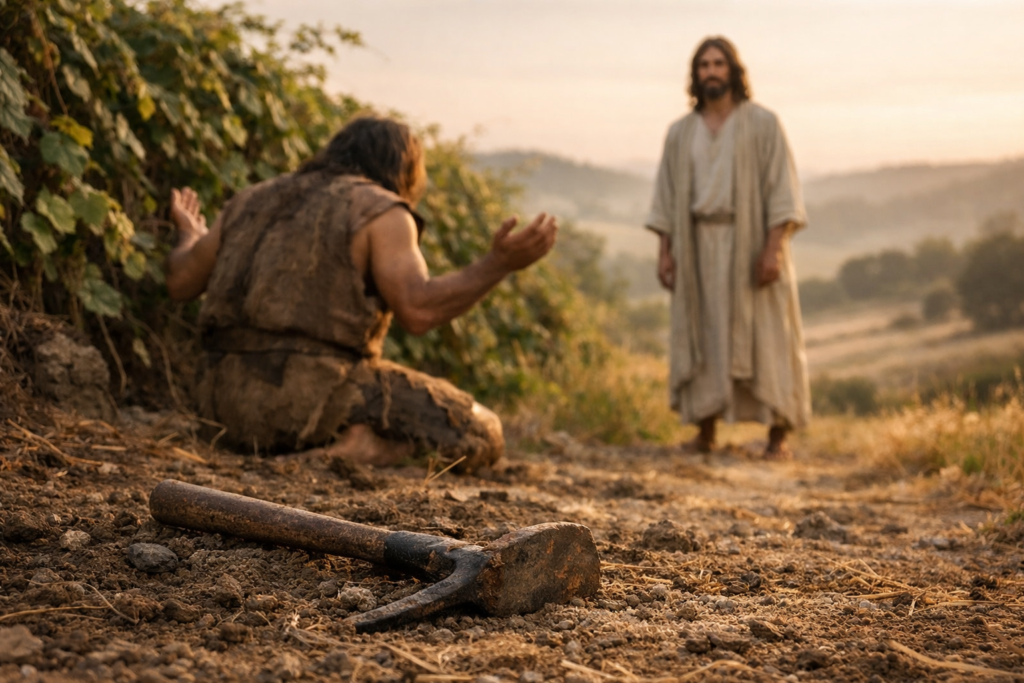
God marked Cain for protection, not because Cain repented, but because Cain only cared about one thing. His physical safety. Sound familiar?
“Just guarantee me there’s no hell, and I’ll live however I want.” That’s the cry of millions today. They don’t want Jesus Christ. They don’t want eternal fellowship with Him. They just want insurance against consequences. But Jesus Christ said, “I am the way, the truth, and the life. No one comes to the Father except through me” (John 14:6).
Cain departed from the presence of the Lord (Genesis 4:16). The Hebrew word for “departed” echoes another departure in John 13:30, when Judas left the upper room after betraying Jesus Christ. “And it was night.” The parallel isn’t accidental. Both chose darkness over the Light of the World.
But here’s the beautiful part. While Cain fled from God’s presence, Jesus Christ came to seek and save the lost (Luke 19:10). Where Cain built walls, Jesus Christ became the door (John 10:9).
Cain built a city and named it after his son Enoch (Genesis 4:17). This wasn’t just urban planning. This was a rebellion with architecture. Psalm 49:11 captures the heart behind it: “Their graves are their homes forever, their dwelling places to all generations, though they called lands by their own names.”
Think about it. Alexandria after Alexander. Port Said after Said. Cities named after people who wanted their land called by their name. But Jesus Christ said, “In my Father’s house are many rooms. I go to prepare a place for you” (John 14:2). Man builds monuments to himself. Jesus Christ builds mansions for us.
Where is Cain’s city of Enoch today? Destroyed and disappeared in the flood. But the city Jesus Christ is preparing? “It has foundations, whose designer and builder is God” (Hebrews 11:10).

The Blueprint for Rejecting Jesus Christ
Now here’s where the story becomes a mirror for our modern world’s rejection of Jesus Christ.
Cain’s descendant Lamech introduces us to something revolutionary. He’s the first man to practice polygamy, taking two wives: Adah (meaning “decoration”) and Zillah (meaning “shadow”). Everything that pleases the eye, everything that pleases the ear. He had it all. But Jesus Christ offers something better than temporary pleasure. He offers abundant life (John 10:10).
Lamech’s three sons? They’re the real game changers in humanity’s attempt to replace Jesus Christ.
Jabal became “the father of those who dwell in tents and have livestock” (Genesis 4:20). Commerce. Trade. The pursuit of wealth. He moved from place to place like a nomad, but not for worship. For profit. Therefore, Jesus Christ warned, “You cannot serve both God and money” (Matthew 6:24).
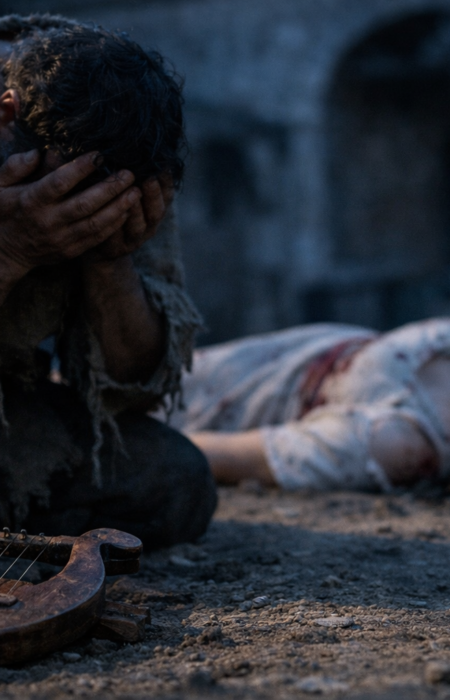
Jubal was “the father of all those who play the lyre and pipe” (Genesis 4:21). Music. Art. Entertainment. Because what good is a civilization without culture to distract the soul from Jesus Christ? But Jesus Christ offers something better than temporary entertainment. He offers eternal joy.
Tubal-cain was “the forger of all instruments of bronze and iron” (Genesis 4:22). Industry. Technology. Innovation. The tools that would build and destroy. Man’s attempt to create without his Creator. But Jesus Christ reminds us, “Apart from me you can do nothing” (John 15:5).
Commerce, entertainment, and technology. The unholy trinity designed to make humanity feel complete without Jesus Christ. As Job 21:12-14 describes their descendants: “They sing to the tambourine and the lyre and rejoice to the sound of the pipe. They spend their days in prosperity… They say to God, ‘Depart from us! We do not desire the knowledge of your ways.'”

But Jesus Christ knew this would happen. He said, “Enter by the narrow gate. For the gate is wide and the way is easy that leads to destruction, and those who enter by it are many” (Matthew 7:13).
Lamech himself reveals the true heart of this civilization. He composes what might be the first poem of human pride, boasting to his wives: “I have killed a man for wounding me, a young man for striking me. If Cain’s revenge is sevenfold, then Lamech’s is seventy-sevenfold” (Genesis 4:23-24).
Notice what he’s doing. Cain needed God’s protection. But Lamech? He doesn’t need divine intervention. He’ll handle his own defense, thank you very much. This is the spirit of antichrist that opposes Jesus Christ in every generation.
But Jesus Christ teaches us differently. “Turn the other cheek” (Matthew 5:39). “Love your enemies” (Matthew 5:44). The way of Jesus Christ is the opposite of Lamech’s way.
Jesus Christ’s Remnant That Changes Everything
Right when the story seems hopeless, Genesis 4:25 reveals Jesus Christ’s eternal plan.
“Adam knew his wife again, and she bore a son and called his name Seth, for she said, ‘God has appointed for me another offspring instead of Abel, for Cain killed him.'”
Here’s what’s beautiful about this. Eve refused to let Abel’s story end in tragedy. She saw God’s hand providing replacement, restoration, and hope. The murdered righteous one would have a substitute who would carry on his legacy. This is a picture of Jesus Christ. Abel dies innocently, like Jesus Christ. But Seth comes as a replacement, like Jesus Christ’s resurrection provides new life.
But it gets better.
Seth had a son named Enosh, which means “frail, weak, mortal” (Genesis 4:26). And here’s the kicker: “At that time people began to call upon the name of the Lord.”
You see what happened? When humanity finally acknowledged its weakness, it turned to God’s strength. When people recognized their mortality, they reached for the immortal. This is exactly what Jesus Christ calls us to do. “Come to me, all who labor and are heavy laden, and I will give you rest” (Matthew 11:28).
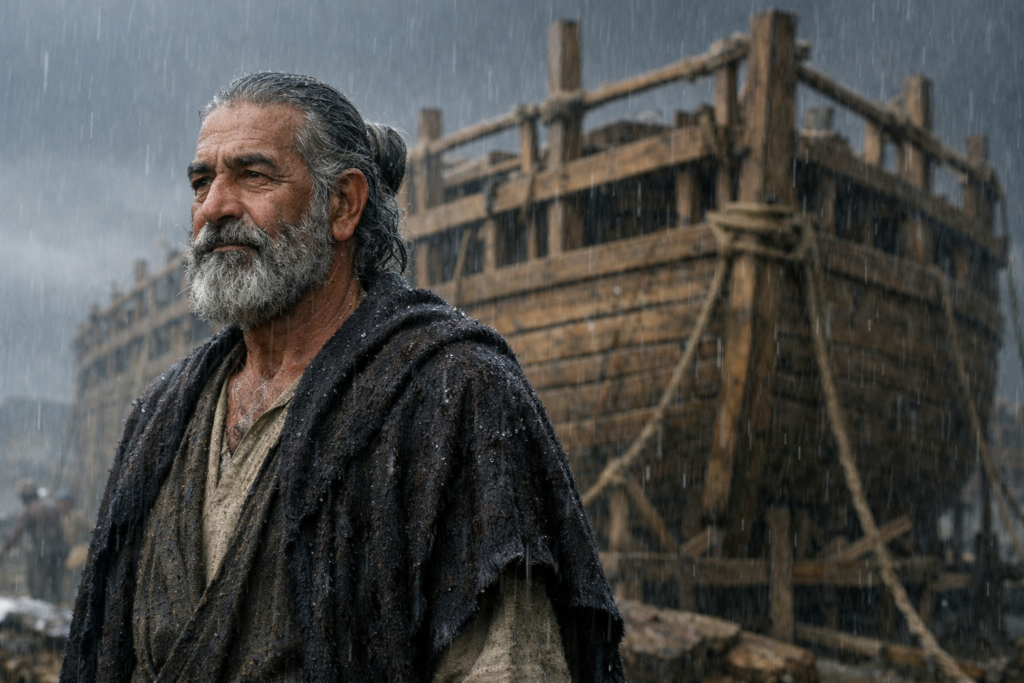
This pattern repeats throughout history, always pointing to Jesus Christ. God always preserves a remnant that calls on His name. During the flood, Noah walked with God while the world drowned in violence. When the earth filled with paganism, God called Abraham to father the nation that would bring forth Jesus Christ. When Israel turned to idols, prophets like Elijah discovered 7,000 who hadn’t bowed to Baal (1 Kings 19:18).
But here’s the ultimate revelation. Every person alive today descends from Seth through Noah. The murdered Abel, replaced by Seth, ultimately inherited the earth. This points directly to Jesus Christ, who was murdered on the cross but rose again and now inherits all things.

Isaiah 53:8-10 prophesied about Jesus Christ: “He was cut off from the land of the living… they made his grave with the rich… Yet it pleased the Lord to crush him… When his soul makes an offering for guilt, he shall see his offspring; he shall prolong his days.”
The murdered Messiah sees His offspring. Who are His offspring? Everyone who calls on the name of Jesus Christ. Everyone who puts their faith in Him. Everyone who believes that He died for their sins and rose again.
Even today, while millions live in Cain’s city of commerce, entertainment, and technology, there’s a remnant that calls on the name of Jesus Christ. They’re not powerful. They’re not many. But they belong to Him.
The contrast is stark. Cain’s descendants built monuments to themselves that crumbled in the flood. But those who trust in Jesus Christ? They’re building something eternal. “Unless the Lord builds the house, those who build it labor in vain” (Psalm 127:1).
Here’s what this means for you today. The world system is still offering the same three temptations that try to replace Jesus Christ: “the desires of the flesh and the desires of the eyes and pride of life” (1 John 2:16). But Jesus Christ has overcome the world (John 16:33).
The question isn’t whether you’re strong enough to build your own kingdom. The question is whether you’ll put your faith in Jesus Christ. Because at the end of history, when Jesus Christ returns, “every knee should bow, in heaven and on earth and under the earth, and every tongue confesses that Jesus Christ is Lord, to the glory of God the Father” (Philippians 2:10-11).
Cain’s city always falls. But those who call on the name of Jesus Christ? They inherit everything.
Here’s your moment of decision: Stop trying to build your own kingdom and put your faith in Jesus Christ today. He died on the cross for your sins and rose again to give you eternal life. Romans 10:13 promises, “Everyone who calls on the name of the Lord will be saved.”
Don’t be like Cain, fleeing from God’s presence. Don’t be like Lamech, trusting in your own strength. Be like those who call on the name of Jesus Christ. Acknowledge your weakness. Confess your sin. Put your faith in the One who died and rose again for you.
Pray right now: “Jesus Christ, I believe you died for my sins and rose again. I put my faith in you alone for salvation. Come into my life and make me part of your remnant.” Because the remnant may be small today, but tomorrow belongs to those who call upon the name of Jesus Christ.